

Business Operation · 2025
In this section22 topics
- Corporate Information4 items
- Dividend Policy2 items
- Major Shareholders1 item
- Business Strategies Overview5 items
- Material Changes & Developments1 item
- Use of Proceeds from Securities Offerings3 items
- Commitments Made in the Registration Statement2 items
- Group Operating-Structure Policy1 item
- Companies Where the Company Holds ≥10%1 item
- Shareholders with Potential Conflict of Interest1 item
- Relationships Among Major Shareholders1 item
- Shareholders' Agreement1 item
- Shareholding Diagram (Group Structure)3 items
- Income Structure3 items
- Product / Service Characteristics2 items
- Research & Development6 items
- Assets Used in the Business6 items
- Marketing Policy & Competition3 items
- Procurement of Products & Services2 items
- Projects Under Construction1 item
- Debentures & Bills of Exchange3 items
- Convertible Securities1 item
Corporate Information
Company Name
MICRO LEASING PUBLIC COMPANY LIMITED
Telephone
0-3410-9200
Website
www.microleasingplc.com
contact@microleasingplc.com
Dividend Policy
Dividend Policy
The Company’s dividend payment policy is to pay at least 40 percent of its net profit of the separate financial statements and after deducting corporate income tax and various reserves. However, The subsidiaries will consider paying dividends based on the net profit after the deduction of the corporate income tax each year. However, this will depend on the investment plan and other factors. The annual dividend payment under the above policy must be approved by the Board of Directors and must be presented for approval to the shareholders meeting respectively, except when it is an interim dividend payment, under such policy, it must be approved by the Board of Directors, then the Board of Directors will report to the shareholders at the next shareholders' meeting.
Historical Dividend Payments
| This Year | Last Year | 2 Years Ago | 3 Years Ago | 4 Years Ago | Metric | Description |
|---|---|---|---|---|---|---|
| 0.15 | -0.15 | -0.06 | 0.07 | 0.2 | Net profit per share (Baht : Share) | Net profit per share (baht : share) |
| 0.03 | 0 | 0.03 | 0.07 | 0.05 | Dividend per share (Baht : Share) | Dividend per share (baht : share) |
| 0 | 0 | 0 | 0 | 0 | Dividend stock ratio (Number of original shares: dividend shares) | Ratio of stock dividend payment (existing share : stock dividend) |
| 0.03 | 0 | 0.03 | 0.07 | 0.05 | Dividend share value per share (Baht : Share) | Value of stock dividend per share (baht : share) |
| 0.03 | 0 | 0 | 0.07 | 0.05 | Total dividend payment value (Baht : Share) | Total dividend payment (baht : share) |
| 98.02 | 0 | 0 | 0 | 0 | Dividend payout ratio to net profit (%) | Dividend payout ratio compared to net profit (%) |
Business Strategies Overview
Chairman's Message
Message from the Chairman of the Board of Directors
The year 2025 has proven to be another challenging period for the Thai economy and the financial industry. Nevertheless, Micro Leasing Public Company Limited has continued to stand firm with stability and a strong sense of responsibility toward all stakeholders, customers, business partners, shareholders, employees, and society at large. Throughout the year, the Company has adhered to a strategy focused on sustainability and long-term value creation, emphasizing prudent risk management and adaptability to the volatile market environment and emerging technologies.
As Chairman of the Board, I place great importance on Good Corporate Governance to foster trust and transparency. The Company has strengthened its governance framework and aligned its operations with international standards to ensure sustainable growth and maintain the confidence of all stakeholders.
Looking ahead, the Company will continue to advance financial innovations that meet customer needs while pursuing balanced business expansion without compromising social and environmental responsibilities. I am confident that with the collective efforts of the Board of Directors, management team, and all employees, we will deliver sustainable returns to all stakeholders.
On behalf of the Board of Directors of Micro Leasing Public Company Limited, I would like to express my sincere gratitude to our shareholders, customers, business partners, financial institutions, and all stakeholders for their continued support. I also extend my appreciation to our management team and employees for their dedication and commitment in driving the Company toward stable and sustainable growth.
Assistant Professor Krit Umpote
Chairman and Independent Director
Message from the Managing Director
In 2025, Micro Leasing Public Company Limited operated under highly volatile economic conditions both domestically and internationally. Despite these challenges, the Company successfully overcame obstacles and achieved continuous growth. This accomplishment was made possible by a dedicated team working in harmony, enabling efficient management and strategic adjustments aligned with market demands.
The Company has developed products and services that meet the needs of all customer segments while enhancing service standards to ensure greater convenience, speed, and security. All operations have been carried out with prudence and strict compliance with applicable rules, regulations, and laws, reflecting our commitment to strong governance principles.
Looking ahead, we remain focused on embedding ESG values into our business strategy. This includes improving credit management efficiency, mitigating risks, and maintaining portfolio quality while expanding our customer base and diversifying service channels. We will continue to invest in digital innovation to address changing consumer behaviors and strengthen our competitive advantage. At the same time, we are committed to environmental responsibility, social impact, and sound governance, ensuring that our growth contributes positively to society and aligns with global sustainability standards.
These efforts will position Micro Leasing as a true leader in the retail lending business, delivering financial stability for all stakeholders and creating long-term value for Thai society.
Finally, on behalf of the management team, I would like to express my sincere gratitude to our shareholders, customers, business partners, financial institutions, and all stakeholders for their trust and continued support. I also extend my appreciation to the Board of Directors, executives, and employees for their dedication and commitment in driving the Company toward sustainable and responsible growth.
Mr. Wisarn Booranasuntikoon
Managing Director
Message from the Founder
When I founded Micro Leasing Public Company Limited, I had one clear intention: to help hardworking people—whether transport operators or small business owners—gain fair, transparent, and uncomplicated access to financial resources. I have always believed that if we can help small players stand firmly, the Thai economy will stand firmly as well.
Throughout the years, Micro Leasing has never stopped at being just a lender. We have committed ourselves to being a true “caretaker”—a consultant, a mentor, and a problem-solver who seeks the best solutions for every customer. We carefully select products, services, and solutions that genuinely support our customers’ businesses, whether it’s transport operators looking to expand their logistics systems or small entrepreneurs seeking their first capital to start a new chapter in life.
Our approach may come from professionals, but our intention is simple: to provide services that are accessible, warm, and sincere—like a family member who wants to see everyone grow together.
The journey of Micro Leasing has had both beautiful moments and challenging times. But every step we’ve taken has strengthened my belief that trust is the most important foundation of any business. We have learned, grown, and proven that honoring our commitments is our highest priority—especially when it comes to fulfilling our promise to repay bonds to shareholders and investors. Our word is our dignity, and your trust is what we safeguard with all our heart.
Looking ahead, Micro Leasing will continue to move forward with the same heart—the heart that wants to help, advise, and be a driving force for Thai entrepreneurs to grow sustainably, especially in the transportation sector, which plays a vital role in the country’s logistics system. We will bring innovation, technology, and team development to enhance our services even further. But the warmth, sincerity, and family-like accessibility… we will preserve unchanged.
Finally, I would like to express my heartfelt gratitude to our shareholders, customers, partners, board of directors, executives, and employees. Each of you is an essential source of strength that has enabled Micro Leasing to grow steadily to this day. I believe we still have a long journey ahead to walk together, and I will do my utmost as the founding chairman to ensure that our Micro Leasing family continues to grow with value and contribute positively to Thai society for the long term.
Mr.Thammasak Auchyawat
Founder Chairman
Vision
"To be the leading provider of comprehensive services and consultancy for transport operators and individual customers throughout Thailand."
Objectives
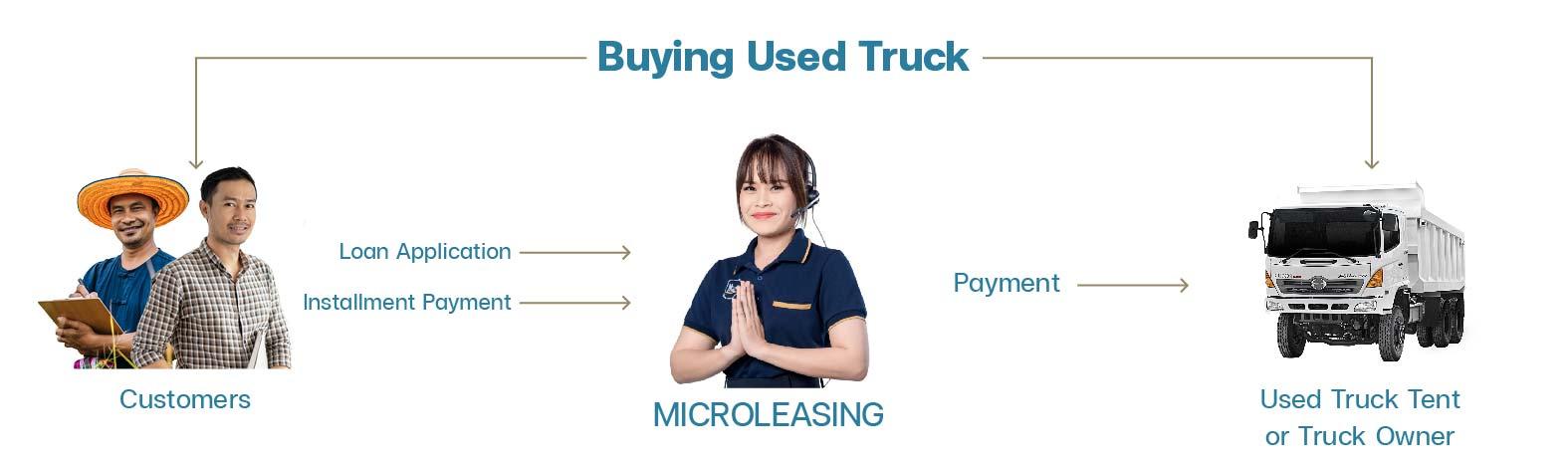
Truck hire purchase loan is a form of loan service providing with objectives to provide the alternative funding sources or enhance liquidity for individuals or business owners who do not have to invest in buying such assets with their own cash. The hire purchase loan service includes 3 relating parties, that is, 1) customer of purchase hirer, 2) used truck tent operators or previous truck owner, and 3) the Company which provides hire purchase loan service.
Goals
The company is committed to mobilizing its data, insight, knowledge, and experience to develop into a body of knowledge for creating services and providing consultations to customers, most of whom are small transport operators using trucks as their main business vehicles. The goal is to continuously expand the business in related products and services by increasing the customer base from the company's core service products, including used truck hire-purchase, personal loans with and without title deeds as collateral, new motorcycle hire-purchase, and consultancy services to reduce operational risks for customers through non-life and life insurance brokerage businesses. Additionally, the company aims to develop other products and services that support sustainable growth together with customers, partners, employees, shareholders, and society in the future.
Business Strategies
Competition Strategy
• For the company's strategy, the focus will be on becoming a comprehensive financial advisor for transport operators and individual retail customers. This involves developing products and services that cater to the varied needs of different clients and partners. The company will nurture its workforce to possess professionalism infused with industry knowledge, legal compliance, and a familial approach to client and partner interactions. Building credibility and trust with shareholders and investors through transparent business operations and financial reports is paramount. Using technology to streamline operations and cut costs, aligning with the organization's scale at different times, and emphasizing environmental, social, and governance (ESG) principles for sustainable growth is also a priority.
Marketing Strategy
• Maintain and grow the hire purchase loan portfolio to 3 billion THB by 2025. Focus on retaining existing customers by expanding related products and services that support transport operators and individual retail clients. Also, maintain strict credit assessment protocols due to the rapidly changing economic environment.
• Adjust the loan portfolio by increasing the proportion of high-yield loans, such as motorcycle hire purchase loans or personal loans with registration books as collateral, and increasing interest rates for high-risk customers during this period.
• Enhance related products and services to support transport operators and individual retail clients. Manage business risk with appropriate insurance products at affordable rates, and act as consultants to solve problems or help client's business grow sustainably.
• Expand and integrate channels to acquire customers, such as developing credit officers into customer relationship officers to match different customers with suitable products, thereby increasing the number of non-credit brokers, such as registration transfer brokers and insurance brokers. This helps expand credit from other product channels.
Operational Strategy
• Develop credit checking tools to ensure prudent and thorough credit services, reducing business risks. Adapt and improve the Credit Scoring Model to suit each debtor type and align with changing circumstances.
• Improve information technology systems to enhance the efficiency of loan approval processes, ensuring speed, accuracy, and maximum customer satisfaction. For example, using mobile applications for credit services to gain a competitive edge and support future business expansion. Enhance server operating systems and databases for stable service delivery.
Financial Strategy
• Restructure finances appropriately, focusing on liquidity management to support continuous business expansion. This includes issuing long-term debentures that match the average lease contract term and controlling the debt-to-equity ratio as per financial institutions' requirements.
• Secure suitable financing sources to ensure the company remains competitive, including issuing both short-term and long-term debentures.
• Adjust the business operation plan to be more efficient in order to reduce operating costs and enhance the company's competitiveness by increasing the sales of related products or services of the affiliated companies, including other products or services under development. Other tasks such as administrative work, contract work, and other documentation will use shared human resources from the central unit. Additionally, the company will reduce outsourcing in some processes to manage existing human resources more efficiently.
Human Resources Strategy
• Develop and promote the learning of marketing staff and customer relations officers to support the expansion of the service base and provide comprehensive consulting services to the company's customers.
• Retain valuable personnel by offering appropriate and fair compensation and benefits, consistent with company performance and individual achievements.
• Focus on developing and building personnel to have knowledge and expertise through training at the learning center at the headquarters and on-site training to establish work standards and support future business expansion.
Material Changes & Developments
Material Changes & Developments
| Year | Description |
|---|---|
| 2,023 | - In June, • The issuance of 2 series. of debentures, namely Debentures of Micro Leasing Public Company Limited No. 1/2023, series 1, due 2024, in the amount of 302.90 million baht and the Issuance namely Debentures of Micro Leasing Public Company Limited No. 1/2023, series 2, due 2025, in the amount of 249.90 million baht total of 552.8 million baht. - In August, • Rated “100 points (4TIA)” based on Quality of Annual General Meeting arrangement (AGM Checklist) by Thai Investors Association. - In November, • Rate “Very Good” or 4 Star based on Corporate Governance Report of Thai Listed Companies by Thai Institute of Directors (IOD) |
| 2,024 | - In October, • The issuance of 1 series. of debentures, namely Debentures of Micro Leasing Public Company Limited No. 1/2024, due 2027, in the amount of 169.90 million baht - In November, • Rated “100 points (4TIA)” based on Quality of Annual General Meeting arrangement (AGM Checklist) by Thai Investors Association • Rate “Very Good” or 4 Star based on Corporate Governance Report of Thai Listed Companies by Thai Institute of Directors (IOD) • SET ESG Ratings at BBB level of The Stock Exchange of Thailand (SET) |
| 2,022 | - In January, • Established a subsidiary under the name Micro fin Co., Ltd. - In March, • has jointly invested with the company Micro Plus Leasing Limited and expanding credit services by opening branches in Rayong and Sukhothai - In April, • expanding credit services by opening a branch in Bangkok and The issuance of 2 series. of debentures, namely Debentures of Micro Leasing Public Company Limited No. 1/2022, series 1, due 2024, in the amount of 321.10 million baht and the Issuance namely Debentures of Micro Leasing Public Company Limited No. 2/2022, series 2, due 2025, in the amount of 478.90 million baht total of 800 million baht. - In May, • expanding credit services by opening a branch in Sakon Nakhon, Surin and Chaiyaphum. - In August, • Rated “99 points (4TIA)” based on Quality of Annual General Meeting arrangement (AGM Checklist) by Thai Investors Association. - In October, • The issuance of 2 series. of debentures, namely Debentures of Micro Leasing Public Company Limited No. 2/2022, series 1, due 2024, in the amount of 558.50 million baht and the Issuance namely Debentures of Micro Leasing Public Company Limited No. 2/2022, series 2, due 2025, in the amount of 269.10 million baht total of 827.60 million baht. - In November, • Rate “Very Good” or 4 Star based on Corporate Governance Report of Thai Listed Companies by Thai Institute of Directors (IOD) |
| 2,025 | In April,
In November,
|
Use of Proceeds from Securities Offerings
Is There Money Raised from a Securities Offering Still to Report On?
Yes
Offerings
| Type of Securities | Amount Raised Given As | Amount Raised (Million Baht) | Uses of the Money | Used as Declared? | Related Link |
|---|---|---|---|---|---|
| Debt Instruments | 2873 | 123.1 | 2025-12-31 · Objective: 1. Purchasing assets, investing, or covering business expenses related to current business operations. 2. Short-term working capital. · Period type: 2869 · Start period: 2025-10-01 · Spent amount type: 2873 · Start spent amount: 123.1 · Expected amount type: 2873 · Start expected amount range: 123.1 | Y | https://market.sec.or.th/public/ipos/IPOSDE01.aspx?TransID=680316 |
Law Governing the Debt Securities
Notably, the bond issuer has been authorized by the Securities and Exchange Commission (SEC) to proceed with this bond issuance and offering pursuant to the SEC Board Notification No. TorJor. 16/2565 regarding the Application for and Authorization of the Offering of Newly Issued Debt Securities to Limited Groups of Persons and the Offering of Convertible Bonds to Specific Types of Investors, dated September 23, 2022 (including any amendments thereto). These bonds are exclusively offered to institutional investors and/or high net worth investors. The bond issuer has registered the transfer restriction with the SEC, limiting bond transfers solely to those within the institutional investor and/or high net worth investor groups as defined in the SEC Board Notification No. GorJor. 5/2552 regarding the Definitions in Notifications Relating to the Issuance and Offering of All Types of Debt Securities, dated March 13, 2009 (including any amendments thereto), and in accordance with the definitions specified in the SEC Board Notification No. GorJor. 39/2564, regarding the Definitions of Institutional Investors, Ultra High Net Worth Investors, and High Net Worth Investors, dated December 24, 2021 (including any amendments thereto). As such, the bond issuer and/or the bond registrar shall not register any bond transfers to individuals who are not "institutional investors" or "high net worth investors" unless such transfer is by inheritance.
Commitments Made in the Registration Statement
Are There Commitments or Conditions from an Offering or Listing?
Yes
Commitments and How They Were Met
As I, Microleasing Public Company Limited, a legal entity of the public limited company form, registered and founded in accordance with Thai law No.0107562000416 Located at the office located at 863/3 Phetkasem Road, Sanam Chan Subdistrict. Mueang Nakhon Pathom District Nakhon Pathom Province which hereinafter will be called "Security provider" Decide on the kind of property claims that the bond issuer and the right's debtor will have. without identifying the rights of the debtor According to the terms of the contract for business collateral, Asia Plus Securities Company Limited as collateral for the debt on behalf of bondholders ("Security recipient")."High-risk guaranteed bonds of Microleasing Public Company Limited No. 1/2024, due for redemption in 2027," as security for debt.whereby the debenture issuer has the option to redeem the debentures prior to the redemption date, as well as the responsibilities of the collateral provider and/or any individuals covered by debentures.
Group Operating-Structure Policy
Description
Micro Leasing Public Company Limited refers to the Company providing second-hand truck loans.
Subsidiaries refer to a group of companies that support the Company's business and are considered integral business units of the Company, in which the Company is a major investor. The group of subsidiaries is closely supervised by the Company to ensure operations align with the Company's policies as a shareholder and to maintain efficiency in service provision. Companies within the group include:
• Micro Insure Broker Co., Ltd.
• Micro Fin Co., Ltd.
• Micro Plus Leasing Co., Ltd.
Companies Where the Company Holds ≥10%
Companies (≥10% Holding)
| Company Name | Address | Province | Zip Code | Telephone | Fax | Business Type | Security Type | Shares | Paid-up Shares |
|---|---|---|---|---|---|---|---|---|---|
| Microinsure Broker Co., Ltd. | 863/3 Phetkasem Road, Sanamchan Sub-district, Mueang Nakhon Pathom District | Nakorn Phathom | 73000 | 034109200 | - | Non-life and Life Insurance Broker | Common shares | 29,998 | 30,000 |
| Microfin Company Limited | 863/3 Phetkasem Road, Sanamchan Sub-district, Mueang Nakhon Pathom District | Nakorn Phathom | 73000 | 034109200 | - | Provide regulated personal loans | Common shares | 499,997 | 500,000 |
| Micro Plus Leasing Company Limited | 863/3 Phetkasem Road, Sanamchan Sub-district, Mueang Nakhon Pathom District | Nakorn Phathom | 73000 | 034109200 | Provide new motorcycle hire purchase financing services | Common shares | 4,080,000 | 8,000,000 |
Income Structure
Product / Service Income
| Category | Description | This Year | This Year % | Last Year | Last Year % | 2 Years Ago | 2 Years Ago % |
|---|---|---|---|---|---|---|---|
| Total revenue from operations | Total revenue from operations | 600,272.31 | 100 | 760,812.53 | 100 | 919,274 | 100 |
| Interest income from hire purchase | 472,911.17 | 78.78 | 646,149.21 | 84.93 | 782,858.8 | 85.16 | |
| Interest income from loan | 10,050.59 | 1.67 | 9,139.14 | 1.2 | 972 | 0.11 | |
| Fee and service income | 96,267.59 | 16.04 | 93,635.77 | 12.31 | 124,698 | 13.56 | |
| Other | Others | 21,042.96 | 3.51 | 0 | 0 | 0 | 0 |
Export Income
| Category | Description | This Year | This Year % | Last Year | Last Year % | 2 Years Ago | 2 Years Ago % |
|---|---|---|---|---|---|---|---|
| Total revenue | Total revenue | 600,272.31 | 100 | 64,614 | 100 | 919,274 | 100 |
| Domestic | Domestic | 0 | 0 | 0 | 0 | 0 | 0 |
| International | International | 0 | 0 | 0 | 0 | 0 | 0 |
Other Income
| Operating Other Income | Non-Operating Other Income | Share of Profit |
|---|---|---|
| 1710 · As of year: 21042.96 · Description: Total other income · As of yesteryear: 11888.41 · As of year before yesteryear: 10745.0 · 1711 · As of year: 0.0 · Description: Other income from operations · As of yesteryear: 0.0 · As of year before yesteryear: 0.0 | 1712 · As of year: 21042.96 · Description: Other income not from operations · As of yesteryear: 11888.41 · As of year before yesteryear: 10745.0 | 1713 · As of year: 0.0 · Description: Share of profit · As of yesteryear: 0.0 · As of year before yesteryear: 0.0 |
Product / Service Characteristics
Business Type
3115
Business Groups
| Business Group | Description | ||||||||||||||||||||||||||||||||||||||||||||||||||||||||||||||||||||||||||||||||||||||||||||||||||||||||||||||||||||||||||||||||||||||||||||||||||||||||||||||||||||||||||||||||||||
|---|---|---|---|---|---|---|---|---|---|---|---|---|---|---|---|---|---|---|---|---|---|---|---|---|---|---|---|---|---|---|---|---|---|---|---|---|---|---|---|---|---|---|---|---|---|---|---|---|---|---|---|---|---|---|---|---|---|---|---|---|---|---|---|---|---|---|---|---|---|---|---|---|---|---|---|---|---|---|---|---|---|---|---|---|---|---|---|---|---|---|---|---|---|---|---|---|---|---|---|---|---|---|---|---|---|---|---|---|---|---|---|---|---|---|---|---|---|---|---|---|---|---|---|---|---|---|---|---|---|---|---|---|---|---|---|---|---|---|---|---|---|---|---|---|---|---|---|---|---|---|---|---|---|---|---|---|---|---|---|---|---|---|---|---|---|---|---|---|---|---|---|---|---|---|---|---|---|---|---|---|---|
| (1) Hire purchase loans for used truck (2) Sale and Hire purchase back loans (3) Refinancing loans (4) Non-life insurance and life insurance broker service business (5) Secured personal loans and without collateral (6) Motorcycle hire purchase loan | Overview of Hire Purchase Loan Services Truck hire purchase loan is a form of loan service providing with objectives to provide the alternative funding sources or enhance liquidity for individuals or business owners who do not have to invest in buying such assets with their own cash. The hire purchase loan service includes 3 relating parties, that is, 1) customer of purchase hirer, 2) used truck tent operators or previous truck owner, and 3) the Company which provides hire purchase loan service.
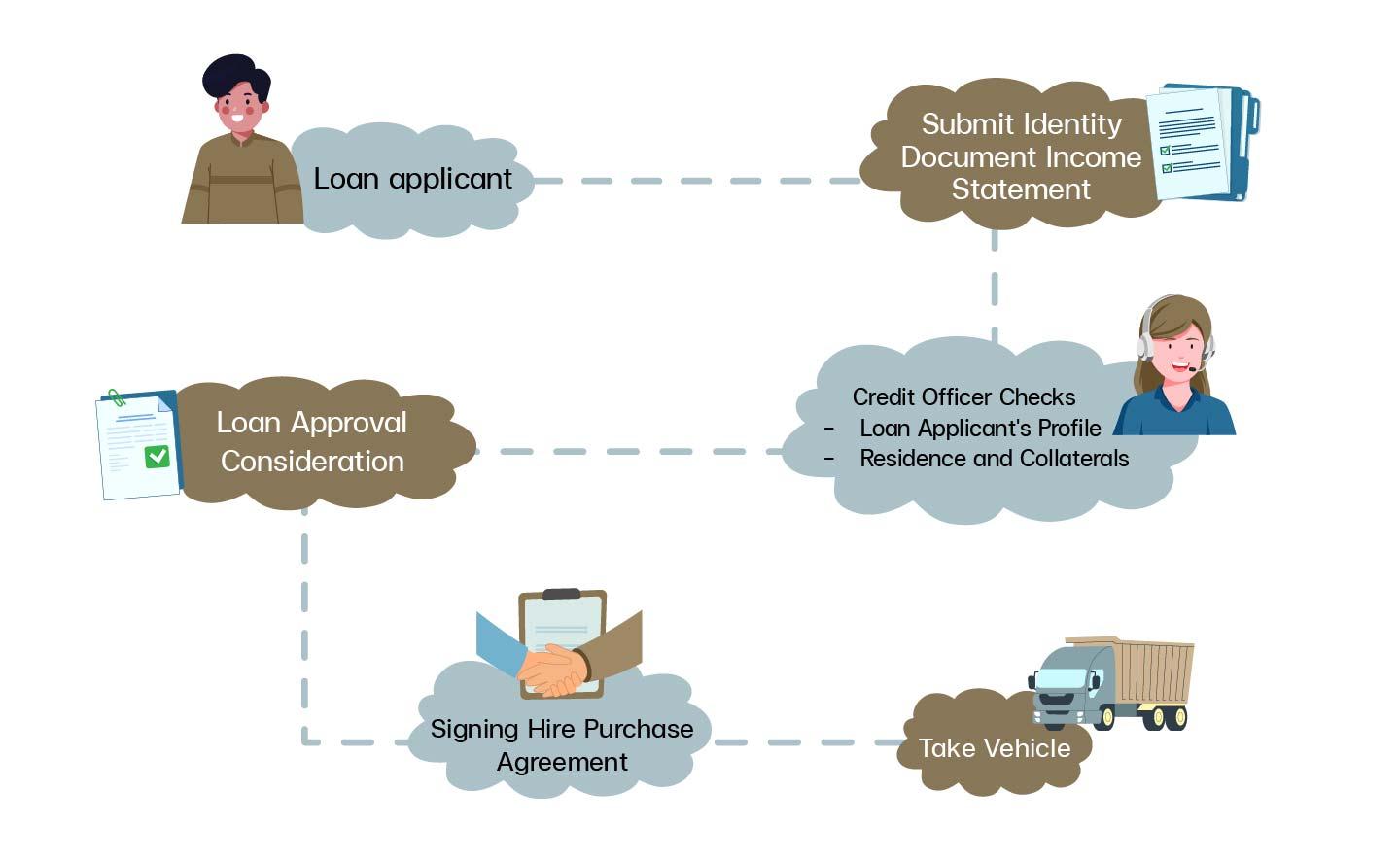
In providing hire-purchase loans for used trucks, when a customer agrees to purchase a truck from a used truck dealer or the original truck owner, the customer will submit various documents required for the loan application to the credit management officer of the company. The credit management officer will collect these documents, initially review and verify the qualifications of the hire-purchase loan applicant, and then send the customer's hire-purchase information to the credit analyst department at the headquarters for approval by the authorized credit approver. Subsequently, the customer's loan approval results, along with the supporting information for the loan approval, will be sent to the operations department for a final review before preparing the hire-purchase contract for signing with the customer. When customers agree to sign hire purchase agreement with the Company which provides hire purchase loan service, the Company shall pay the truck value to used truck tent operators or previous owners after the truck ownership is transferred to the Company. Then, customers will pay monthly installments to the Company while they can occupy and utilize hire purchase truck along the hire purchase period. The maintenance and other occurred expenses, i.e., annual vehicle tax renewal and insurance fees will be responsible by customers. The ownership of the truck belongs to the Company and shall be transferred to customers when they complete the last installment payment according to the agreement. If customers cannot pay the installments or have 3 outstanding installments, the Company will send registered notices to customers and surety to let them pay the overdue installments within 30 days after receiving notices. If the payment is not made within the deadline, the hire purchase agreement will be held cancelled. The trucks will be confiscated and sold at auction. In providing hire-purchase loans for used trucks, the company has over 60 credit management officers and credit coordinator officers who provide services and acquire customers through coordination with nearly 430 used truck dealers who are business partners of the company. Additionally, the company has a network of over 250 agents spread across various regions, enabling the company to reach customers interested in purchasing used trucks nationwide.
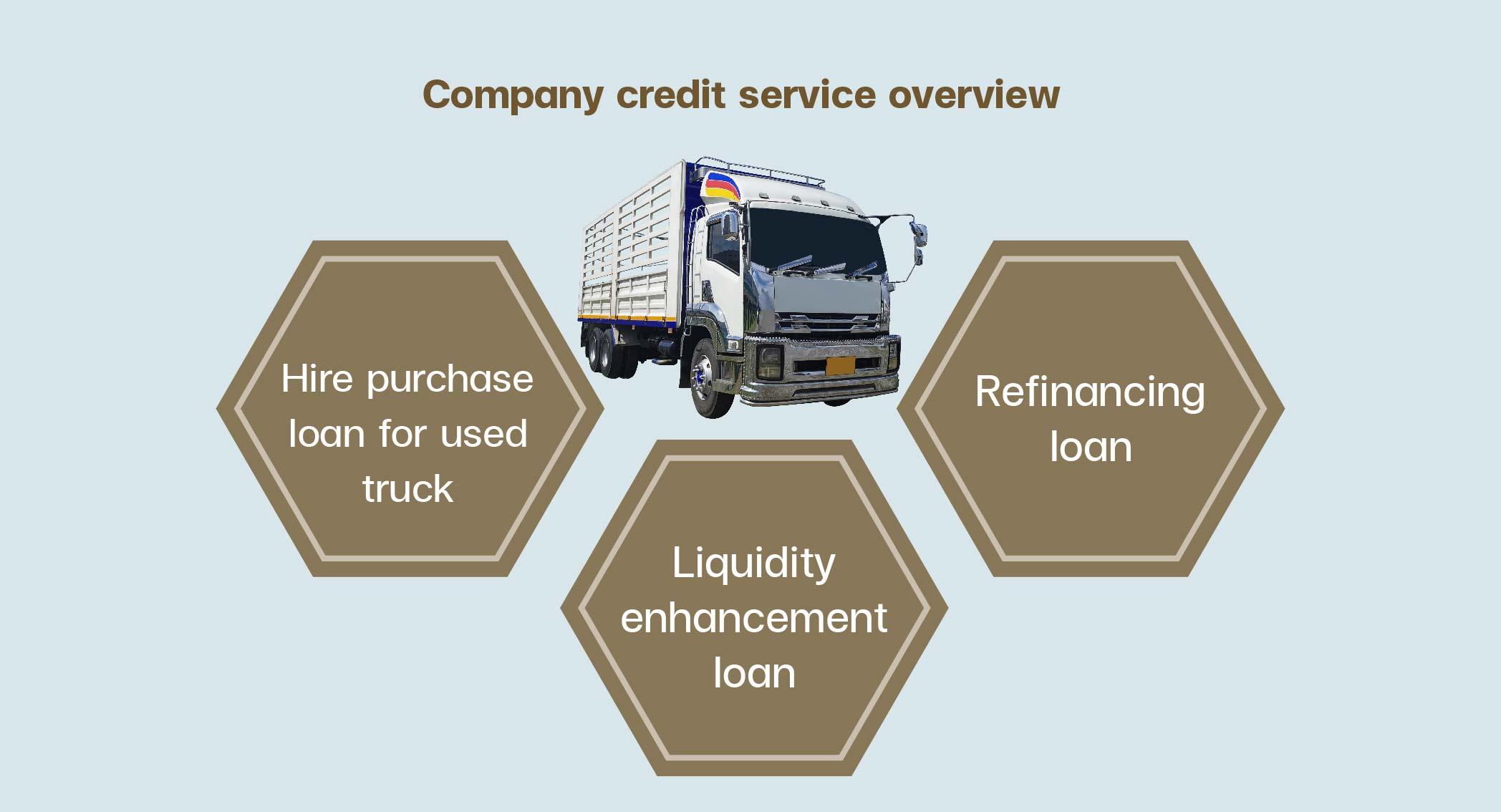
The Company provides services for used truck hire purchase loans, liquidity enhancing loans, and refinancing loans to retail customers, both individuals and corporates. The category of loan services is as follows: (1) Hire purchase loans for used truck The company provides hire-purchase loans for used trucks to individual and corporate customers who wish to purchase used trucks for business purposes. Generally, the company offers loan to value at 80% of the truck's appraised value, which serves as collateral. The approved loan amount or financing amount will be based on the purchase price or the appraised value (whichever is lower) according to the credit analyst department's current appraisal guidelines. Therefore, customers must pay the remaining balance in cash to the seller and make monthly hire-purchase payments to the company. The asset will become the customer's property once they have fully paid the installments as per the contract. A Truck that can be used to apply for a hire purchase loan from the company Must be commercial vehicles such as 6-wheel trucks, 10 wheels, 12 wheels, tractor trailers and trailers covering leading brands such as ISUZU, HINO, and FUSO. Used or used trucks The customers who apply for the loan must genuinely wish to purchase the said vehicle for use in their business operations. In order to have cash flow back to pay principal and interest continuously. The Company focuses on hire purchase loans for used truck since the Company has the professional executives and team with knowledge and specialization in inspecting the used truck history by checking the body and Chassis number to assess the history and usage condition of the trucks. So the Company can set the appropriate credit limit which does not exceed the value of collateral trucks. This helps the Company reduce the risk from credit loss significantly. Moreover, the executives have knowledge about all spare parts of used trucks. If the trucks confiscated from customers need to be repaired, the Company will surely find the sources of appropriate priced spare parts which can help reduce the risk of loss from auction. The Company’s policy accepts only trucks that have been used for not over 25 years. Over 70% of hire purchase trucks of the Company at present have been used for 10-21 years. The hire purchase loans for trucks during these ages allows the Company to set the interest at higher rate than trucks with less years of service. The interest rate goes with the risk of collaterals. Considering credit approval, the Company considers the qualification of credit applicants and ability to pay back. The term of payment can be 12 - 60 installments depending on the ability to pay back of the applicants. The interest rates of loans are flat rates over the term of the contracts and depend primarily on the age of the collateral. The hire purchase interest rates are 7-14% per year over the term of contracts or equivalent to the Effective Interest Rate (EIR) of 13-26% per year. (2) Sale and Hire purchase back loans The Company provides liquidity enhancing loans or collateral loans to general retail customers who are owners of trucks and want working capital to enhance liquidity for their businesses. Customers who own trucks can use their trucks as collateral for credit applying with the Company. Loan applicants must own the trucks for not less than 3 months to ensure their true ownership. The vehicles that will be used to apply for liquidity enhancing loans with the Company include commercial vehicles or various types of trucks similar to the used trucks for hire purchase loans, such as 6-wheel truck, 10-wheel truck, 12-wheel truck, etc. At present, the Company provides service of liquidity enhancing loans in the form of hire purchase agreement only. Customers who want to apply for the loans must submit the real vehicle registration book to the Company as collateral. Then the vehicle’s ownership will be transferred to the Company. During the loan installment payment period, customers can still occupy the vehicles and use them as normal. The ownership will be transferred to customers when they complete the last installment payment as per contract. The process of loan consideration and interest rate frame of liquidity enhancing loans is the same as normal hire purchase loans for used trucks. (3) Refinancing loans The Company provides refinancing loans to customers who have good records and are in the process of used truck hire purchase installment with the Company. That means if customers are in the process of installment payment according to the hire purchase contract with the Company, they can apply for refinancing loans by applying for the new hire purchase loan contract, replacing the existing one. The collateral trucks will be assessed for the new prices as new collaterals. Customers will receive cash for the difference of the loan amount of the new contract and the remaining balance of the previous contract for their financial liquidity support. The Company provides refinancing loans only to customers who have good records of installment payment to the Company. The Company has not yet provided a refinancing loans service to external customers. The interest rates of refinancing loans are the flat rate of 7-14% per year over the term of contract and are equivalent to the normal interest rates of used truck hire purchase loans. (4) Non-life insurance and life insurance broker service business The company operates as a non-life insurance broker and a life insurance broker under the Micro Insurance Broker Company Limited (“MIB”), which was registered as a limited company on October 8, 2021. The registered and paid-up capital is 3,00,000 baht, divided into 300,000 ordinary shares with a par value of 100 baht per share. Currently, the company (“MIB”) holds 29,998 shares in the brokerage, representing 99.99 percent of the total number of shares sold. (5) Secured personal loans and without collateral The company operates personal loan business with collateral. And without collateral under Micro fin Public Company Limited (“MFIN”), which was registered as a limited company on January 20, 2022 with a registered capital and paid-up capital of 50 million baht, divided into 500,000 ordinary shares with a par value of 100 baht per share. The Company holds 499,997 shares, representing 99.99 percent of the total shares sold. (6) Motorcycle hire purchase loan The company operates motorcycle hire purchase business under Micro Plus Leasing Public Company Limited (“MPLUS”) which was registered as a limited company on March 23, 2022, with a registered capital and paid-up capital of 800 million baht, divided into 8,000,000 ordinary shares with a par value of 100 baht per share. The Company holds 4,080,000 shares, representing 51.00 percent of the total shares sold. Currently, there are a total of 8 branches providing loan services, namely Bangkok branch, Nakhon Pathom branch, Nakhon Ratchasima branch, Khon Kaen branch, Udon Thani branch, Sakon Nakhon branch, Phitsanulok branch and Chiang Mai branch. New Loan New loan classified by shares of loan products
Balance of account receivables classified by type of loan products
Income Structure of the Company and its subsidiaries The Company and its subsidiaries’ income structure in 2023 - 2025 is shown below:
1Other incomes include bad debt recovery, income interest from deposit at Bank and gain from sales of assets etc. The company and its subsidiaries had revenues of 919.3 million Baht, 760.8 million Baht, and 600.3 million Baht for the years 2023 to 2025, respectively. The main revenue of the company and its subsidiaries is interest income from purchase contracts for the years ended December 31, 2023 to 2025, amounting to 782.9 million Baht, 646.2 million Baht, and 472.9 million Baht, respectively, accounting for 85.2%, 84.9%, and 78.8% of total revenue. This decrease is due to the loan portfolio, which has stringent screening for the quality of new loans. Micro Fin Company Limited (a subsidiary) has operated lending business in quarter 2, 2023 resulting in increased interest income from loans. Fee and service income includes penalty income fee, collection income, and insurance referral income. The company and its subsidiaries had fee and service income of Baht 124.7 million, 93.6 million Baht, and 96.3 million Baht for the years 2023 to 2025, respectively, accounting for 13.5%, 12.3%, and 16% of total revenue. In 2024, the majority of this income was from penalty income fee, as well as service and fee income from car insurance and credit protection insurance, which decreased in line with the stricter screening of new loan quality. Hire purchase Loan service process Providing hire purchase loan services, the Company considers the qualification of loan applicants and surety to assess their ability to pay debt, inspects and assesses the quality of collaterals to set the appropriate credit limits. The significant business process of hire purchase loan service consists of loan information checking, loan approval consideration, hire purchase agreement signing, installment receiving, debt tracking and collection, and collateral auction • Hire purchase Loan Application Process Customers who want to apply for hire purchase loans with the Company can apply at the branches or the head office in Nakorn Pathom. The Company’s customers can be classified into 2 groups as follows: 1) Individual customers This customer consists of regular individuals over 20 who wish to rent or buy trucks as tools for their jobs in order to make money. Customers must be individuals with steady incomes who work in occupations that can be investigated, such as regular employees, store owners, farmers, or owners of their own businesses. Certain occupations, such as those with a high risk of death or frequent location changes that make tracking challenging, may not be approved or given special consideration by the company. 2) Corporate customers Corporate customer group is registered as a juristic entity, i.e., partnership or company limited, for not less than 1 year with over 1 million Baht of registered capital, of which authorized director has Thai nationality. Corporate customers must have objectives of hire purchase for used trucks for business operation or income generation which is in accordance with their business. At present, all corporate customers of hire purchase loans are external persons. In the past, the Company never granted loans to directors, executives, major shareholders of the Company or any persons related to them. For loan application, customers must prepare their own documents and documents of their surety. The Company requires loan applicants to have surety in all cases since the hire purchase trucks are big trucks which result in the high value contracts. Required documents include identity documents, income statements, and documents of collateral trucks. Credit Management Officers will ask for preliminary information of loan applicants, such as purpose of loan application, and preliminarily check the truck valuated prices on the rate book of used trucks from the Appraisal Section. Customers shall be informed about the preliminary information, such as estimated credit limits, estimated expenses or fees from loan applying process. • Process to review and assess the ability to repayment of loan applicant. Credit Management Officers will check the correctness and completeness of identity documents and income statements of loan applicant and surety before going to the residence of loan applicant, taking photos of loan applicant’s and surety’s residences, to confirm the correct residence location which will be used later for debt collection and truck confiscation if customers do not repay the installments. Then, the branch loan officer will send the loan applicant's information to the head office for verification as follows: Watch list of the company, credit bureau, past payment history, Bankruptcy history and various debts. Moreover, credit officers at the branches will check the correctness of collateral ownership documents, such as copy of vehicle registration and photos of collateral trucks, before sending to the collateral assessment department at the head office to assess the collateral condition, considering type, age, brand, condition and popularity in the market to estimate their values for hire purchase loan.
Credit officers at the branches will gather all acquired information to do the Credit Score model to know the preliminary risk level of customer’s default. The Company developed the Credit Scoring system to assess customer’s risks. If customer’s preliminary credit score is lower than the Company’s criteria, the branch officers will ask for additional documents, such as other sources of income, to bring the applicant’s credit score up to pass the minimum criteria set by the Company. The customer’s credit score model assesses the debt payment records with Credit Bureau and the ability to repay debt at present by considering the following 5C criteria:
(2) Capacity: the ability to repay debt is considered from occupation, source of net income after expenses and other existing debts, as stated in NCB documents. (3) Capital: customer’s capital comes from financial position analysis in other areas, i.e., properties or buildings owned by customer. (4) Collateral: the value of collaterals is based on the hire purchase truck’s good condition, popularity, acceptance in the market, and easily trading. The record of surety must be credible and has solid source of income and good financial position enough to be able to repay loans for loan applicants. (5) Condition: other external factors include economic condition or political situation at that moment which may affect financial status or career of loan applicants and their business partners’ creditability. In the case that loan applicants never have any records in NCB, the Company may request for the documents showing their installment payment to other companies (which are not member of NCB) to assess their ability to repay debt. In such case, loan applicants will get diminishing Credit Score compared to other applicants who have records in NCB system. If the loan applicants do not have any loan payment records with any companies, they will not get any score in the payment record topic in the Credit Score Model. But if the applicants’ total scores from other topics are high enough to pass the minimum criteria, the Company shall consider approving the loans for them. When the Credit Score Model is done, credit officers at the branches will prepare the report of loan application information, report of documents checking and other information regarding loan application. All relevant documents, including hire purchase agreement request form, checking list for correct and complete hire purchase documents, estimated price of trucks from collateral assessment department, documents of checked credit records and bankruptcy records of applicants, photos of residence, photo and copy of hire purchase truck registration, credit scores, preliminary approved credit limits and interest rates, will be submitted to the authorized persons for loan approval. • Process of collateral assessment and credit limit setting Before credit approval, the Company shall assess the condition and value of hire purchase trucks to set credit limits. The Company shall consider: (1) trading price, (2) reference price from Rate Book, and (3) estimated truck price, as follows: Trading prices are the prices that customers agree to trade with truck tent operators or previous owners. The Company has a policy to set credit limits at the maximum of not higher than 90% of trading prices. However, although trading price is an external factor which is out of the Company’s control, the Company prepares the risk prevention measure for the case that some tent operators might set the unrealistically high trading prices by setting the policy to allow the highest credit limits at 90% of trading price in general case and can apply only when the loan is introduced by the Company’s A class tent operator only. One of the important criteria that the Company uses to classify the A class tent operator’s qualification is the trading price of the truck must be defined according to the usage condition. Reference prices are the prices used as reference for estimated prices of trucks. The Rate Book includes prices of each model and each brand of trucks, surveyed by the Collateral Assessment Department, from credible sources of information, Facebook, such as Truck2hand website which is the largest website popular for trading used trucks and has a lot of truck samples, and from the real trading cases from the Company’s truck tent partners. The Company has a policy of regularly reviewing reference prices every 6 month in order to make the Rate Book reflect the updated market prices of trucks. Estimated prices are the prices estimated from the real condition of trucks being put on hire purchase. The Collateral Assessment Department of the Company will assess the condition of truck by component, i.e., tractor, frame, engine, gear system, chassis, tire, and trailer. The highest estimated price must not exceed the Rate Book set by the Company. The Company has a policy to set credit limits including insurance premiums and credit limit protection insurance, at not higher than 90% of truck’s trading price or not higher than 120% of collateral’s estimated price (whatever price is lower.) As a result, the credit limits of some cases can be as high as 120% of collateral’s estimated prices. For example, a used truck has very good condition because it was repaired and changed many spare parts until its condition is better than a sample truck which was referenced in the Rate Book. So the trading price of this truck is high and its estimated price is higher than the reference price in the Company’s Rate Book. However, since the Company’s policy requires the estimated price not to be higher than the Rate Book price, the Company’s estimated price of this truck is lower than the estimated price considering real condition. As a result, in some cases, the Company’s approved the loans at higher prices than the estimated prices. Nevertheless, most of the Company’s approved credit limits are approximately 70-80% of estimated collateral prices. • Process of Loan Approval The Company’s loan approval consideration is conducted on the concise and discreet basis, leading to stable incomes. The Company set the approval authority framework for loan approval to authorized persons in respective order, depending on Credit Line, Loan to Value ratio, and Credit Score of loan applicants. The authorized persons can be the board including the Area Credit Committee level, consisting of Area Manager and all Branch Managers in that area. The approval authority framework can be increased respectively from Chief of Credit, Credit Committee, and Executive Committee up to Board of Directors. If the credit consideration is in line with the credit approval criteria of the Company, the authorized approver will inform the approval result to the branch so that the branch can inform the customer further. In general, if the credit application and documents are complete, the Company will take 3-7 working days for consideration and approval. • Process of making hire purchase agreement When the credit application is approved by area committee or head office, the branch credit officer will inform the credit department to prepare the hire purchase agreement and review the correctness of all documents before making hire purchase agreement. Then, the branch officer will call to inform the customer and make an appointment for signing the hire purchase agreement. The Company’s hire purchase agreement uses the standard format reviewed by the legal department of the Company to be effective as required by law. Moreover, the branch officer will prepare the “loan amount and expenses quotation” for customer to summarize all the credit approval information and identify the fees for doing the agreement, such as a new account opening fee, stamp fee, etc. The finance department will prepare the payment for used truck tent operator or previous truck owner. In this regard, the truck for hire purchase deal with the Company must have the second-class insurance policy, at least in the first year of hire purchase, stating the Company as the beneficiary in order to reduce the risk that may occur from damages of the trucks, both for the case of damage or loss. When customer signs in the contract and documents for hire purchase contract completely, the credit operation department will propose 2 sets of contracts (original and duplicate) to the Company’s authorized person to sign. After customer signs on the hire purchase contract, the branch credit officer shall transfer the truck ownership registration to the Company at the Department of Transportation. Then, finance department will transfer money to the bank account of the used truck tent operator or previous truck owner as the payment of the truck. Customers shall pay installments according to the agreed condition and can take the truck for further use. In this regard, the Company can transfer the payment of the truck to the tent operator or the previous owner within 1 working day after the transfer of truck ownership is finished.
When the branch credit officers receive the registration book back from the Department of Transportation, they shall keep the original hire purchase contract and the real registration book in the safety box in the “Hong Mun Kong” (stable room) of each branch, putting in order by contract number and customer’s code. To receive or to borrow such documents, there must be a record of such action in the document control registration form every time and must be signed for approval by the authorized person. The branch manager is responsible for the Hong Mun Kong and shall copy all documents in a digital filing format as backup information in case the original copies are lost. • Process of receiving installments The Company uses the Bill Payment system in receiving installments from customers. Customers can use a Pay Card which identifies customer’s information, company’s information and amount of payment or a payment form enclosed with the monthly installment receipt to pay for installments in the Bill Payment system by scanning a Barcode at any leading bank of the country. Another option is to pay on the Mobile Banking Application of the banks. The Company has opened accounts with 2 banks which support payment from all banks through the Cross-Bank Bill Payment. In addition, in 2019, the Company added another payment channel through Counter Service at any 7-Eleven branches where there is a sign of Counter Service. Such bill payment system not only provides convenience to customers but also helps reduce the corruptions of branch officers. After implementing such system, the Company announced to cancel the cash payment at all branches. Moreover, the Company does not have a policy to send branch officers to collect cash payments from customers outside the branches. In the case that any branch officer goes out to visit a customer and the customer wants to pay cash for an installment, that branch officer shall suggest or take the customer to the nearest bank to make the installment payment to the Company’s account. In the case that the installment payment is made at the bank, customer shall receive a temporary receipt from the bank and the original receipt / tax invoice will be sent to customer by the head office afterward. At the end of the day, the Company’s finance department at the head office will review the payment transaction from customer. If the amount is fully paid, the finance department will issue the receipt/ tax invoice for customer. All receipts shall be issued from the head office’s system. If any payment transaction is found overpaid or incomplete, the finance department will inform the debt collection department and branch officers to follow up with customer for the full amount repayment. If customer makes a defaulted payment of installments, the Company shall proceed on the regulations of debt tracking and collection. • Process of debt collection The Company has a policy to manage the debt collection efficiently by defining that the branch officer has duty to monitor payment record of customers closely to get customers to pay their installments on time to maintain the not-too-high outstanding debt balance in the system. 5 days before the due date, customers shall receive SMS as a reminder from the Company. However, if a customer makes a defaulted payment or does not pay installment by due date, the Company shall proceed on the debt collection Note: The Company charges for late payment penalty fees and collection fees as deemed appropriate. When the due date is on or getting close, the Company will remind debtors for the penalty fees and collection fees via the calls or reminder letters. If there is a change in the late payment penalty fees or collection fees, the Company will call to inform customers verbally and put the notice at the branch office. The Company shall manage for reminders in written in the future. The Company defines the process of debt collection for the case that customer makes defaulted payment. Starting with a call to a customer for debt collection, the officer records the debt collection information in the system. If a customer has the outstanding 1-2 installments, the Company will issue a payment reminder letter. If a customer cannot be reached, branch officers will go to collect debt at the customer’s or surety’s house. If a customer has the outstanding 3 installments, the Company will issue the termination letter to notify customer to pay the remaining debt within 30 days. If a customer does not pay within the due date, the Company will track customer to collect debt and confiscate the vehicle which shall be further sold at auction. The process of debt collection and vehicle repossession is a collaborative effort between branch officers and the head office collection team, along with the hiring of external local collection teams to enhance debt collection efficiency. However, if the company is unable to locate the customer during the collection process, it will refer the case to a lawyer to pursue legal action against the customer and guarantor. The company will issue a warning letter to the customer and guarantor before filing a lawsuit. The company emphasizes the establishment of fair debt collection procedures, ensuring fair treatment of debtors under the framework of the Debt Collection Act B.E. 2558 (2015) and other relevant regulations. • Process of closing account When a customer pays complete installments as per contract, the finance department and branch officers will check the accuracy of all installments payment to ensure there is no outstanding installment or penalty fees. Then, branch officer shall prepare the original registration book and transfer documents for customer and will call customer to pick up the registration book or send to customer by registered mail as per the informed address. Customer can bring the documents to process the registration of ownership transfer at the Department of Transportation accordingly. • Process of collateral collection In the case that customer does not come to pay all the debt within 30 days from the date of contract cancellation notification, External debt collection company can go to confiscate the collateral trucks at once. After the collateral confiscation, the Company will send the notification to customer and surety to give them a chance to redeem the collateral within 7 days from the confiscation date. Customer can exercise his right for collateral redemption according to the outstanding debt in the hire purchase contract. If the hire purchase customer does not exercise such right, the Company will give the same right to the surety. The customer has options to exercise the right to redeem collateral or to accept that the Company will sell the collateral trucks at auction and the customer will have to pay the difference (if any) to the Company. By not paying for 7 days over the due date, the customer shall be considered refusing to exercise the right of collateral redemption and enable the Company to sell such collateral at auction at once. • Process of collaterals auction When the hire purchase customer refuses to redeem the collaterals, the Company shall cancel the use of such vehicles at the Department of Transportation and sell the confiscated vehicles as soon as possible in order to avoid the price decreasing until it is not enough to pay for the outstanding debt. All confiscated trucks are kept at the parking lot of confiscated vehicles of the Company, which is located on the 5-Rais rented land near Banglane Road in Nakorn Pathom, in order to provide convenience to customers who are interested in buying trucks, including both used truck tent operators and general end users. The parking lot is very safe with surrounded gates to protect the company’s assets. Before the auction, the credit analysis department will gather all confiscated trucks during that period to estimate the selling prices and propose to 2 Assistant Managing Directors to sign for approval of the confiscated truck auction. Truck details can be tracked through the following channels: 1. Line @Microleasing Channel 2. Facebook Channel 3. TikTok Channel 4. YouTube Channel 5. Public relations in front of the company parking. 6. Branch and Employee 7. Auction channels through 4 auction companies such as Apple Auction Company, Union Auction Company, Siam Inter Auction Company. and United Crane Auction. The Company shall send the detail of confiscated trucks to the used truck tent operators interested in offering the prices and shall publicize the truck auction on the Company’s website. In the collateral auction, the Company shall consider the highest offer prices at that period which must not be lower than the estimated prices approved by Assistant Managing Directors. In this regard, the Company emphasizes to sell confiscated trucks to the used truck tent operators because it can close the deals faster than selling to end users. The used truck tent operators usually pay by cash in full amount. In the past 2 years, the Company sold confiscated trucks to the used truck tent operators and agents for 75% of the value of total confiscated trucks. Another 25% was sold to end users. The end user customer who are the real users of the trucks can also apply for the truck hire purchase loan agreement with the Company. The Company shall use the same credit analysis method for consideration as they do in the normal used truck hire purchase agreement. In selling the confiscated trucks to the used truck tent operators, most purchasers are trade partners who introduce hire purchase loan customers to the Company. However, the Company arranges the selection system that selects purchasers who offer the highest price during the same period for the sake of transparency and fairness. In this regard, the Company does not have a policy to sell confiscated trucks by bidding since the bidding offer prices usually are lower than the individual offer prices. Moreover, the Company has a network of the used truck tent operators, who have long term partnership with the Company, which can be another channel for the fast and effective sales of confiscated trucks. However, in the case that the value of confiscated truck sales is not worth the outstanding debts, the Company can file a claim for the missing amount and enforce the case to seize the debtor’s properties for further auction. In this regard, the legal action against debtor and surety depends on the consideration of the prosecution expenses and the outstanding debt after the sales of collateral assets. Customer Profile and Target Group The company provides hire purchase loan services to individual and corporate customers who need to hire purchase second-hand trucks for their business to generate income. The target group includes customers with stable income from their professions, business owners, or farmers who need to purchase trucks for transporting goods or providing commercial services, such as industrial freight, construction materials, and consumer goods transportation.
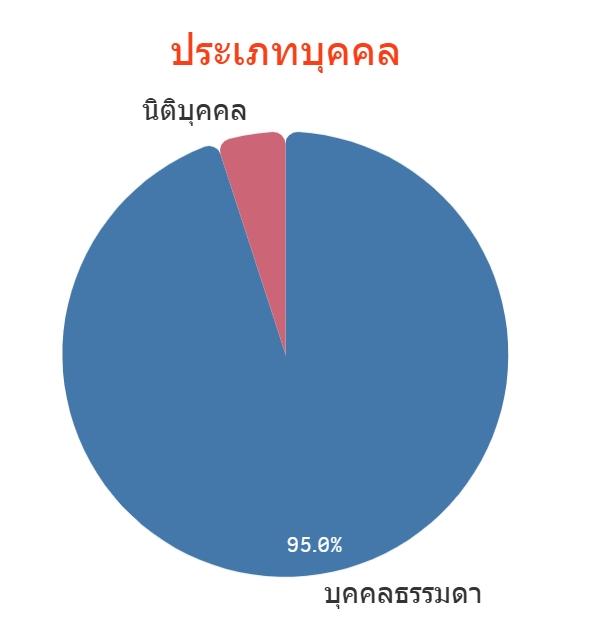
The company's customer groups include individual and corporate customers who are referred by second-hand truck dealers or brokers. In 2025, the company provided hire purchase loans to individual and corporate customers, accounting for 95.0% and 5.0% of total loan issuance, respectively. The company focuses on providing fast and efficient loan services, prioritizing the convenience of customers and second-hand truck dealers. Additionally, the company places great importance on continuous care and development of after-sales services. The company has established plans and strategies to enhance the speed and quality of its services by utilizing statistical data and geographic information in strategic planning. To maintain the existing customer base and expand to new customer groups, the company has observed that previous customers who have fully paid their installments often return to use the company's loan services when they need to purchase a new second-hand truck. The company has a policy to focus on expanding its new customer base by continuously building relationships and increasing the number of second-hand truck dealers and brokers who are partners with the company. Additionally, the company plans to expand branches in various provinces, especially in regions with high industrial growth or areas with a high density of second-hand truck dealers. These locations should be easily accessible via main roads and should provide convenient connections to other provinces. This strategy aims to ensure that the company's services are comprehensive and can reach more target customers in the future. However, since the Company’s main customer target group is the customer group that uses trucks for commercial services, the Company has the risk that such customer group may be sensitive to the domestic economy or the ability to repay debt may change. For example, if hire purchase customer is a farmer, his ability to repay debts may depend on the harvest season or the purchasing power may decrease from the price drop of agricultural crops due to the slowdown of domestic economy or slower recovery than expected. To reduce such risk, in the previous year, the Company turned to focus more on the customer group in the consumer goods transportation industry because consumer goods are necessary for daily life and its demand and supply do not change according to the season. So the transportation operators who are the Company’s hire purchase customers have consistent income and can repay the installments continuously. In addition, the Company gives importance to the careful approval of loan application in consideration of various factors, including the collateral’s quality and loan applicant’s qualification. The Company has a policy to provide hire purchase loan services to customer groups of which the Company has already assessed the risk of debt payment ability. Loan applicants must have purpose to use trucks in business to generate incomes. They must also have a good financial record, credible financial position, certain occupation, stable income and earn enough to pay for installments as per contract. In addition, loan applicant and surety must not be bankrupt or have a record of prosecution and shall sign in the letter of consent for the company to check their credit information. As for other services of loan providing, such as liquidity enhancing loan, at present the Company does not have much of such loan services because this customer group base is still small in the market. Since most trucks are usually under contract with other financial institutions or other financial service companies, the truck owners have not yet owned the trucks completely. Thus, most customers of this kind of loans are the old customers who have completed their hire purchase loan payment with the Company and come back to apply for loans to increase their liquidity. Nevertheless, in the future, the Company plans to study and survey market to approach another group of customers, the SMEs who have already had ownership on the trucks, in order to expand customer base of this credit type. Pricing policy Interest rate The company has a policy to set the hire purchase interest rate for each customer that reflects the risk of lending appropriately, considering economic, corporate governance, social, and environmental factors. From an economic perspective, the company considers factors such as the policy interest rate and the overall industry outlook. From a corporate governance perspective, the company has established responsible and fair lending criteria and communicated them to employees at all levels. From a social perspective, the company considers household debt, the risk of each customer based on credit scores, and the likelihood of default, taking into account age, occupation, credit limit, and payment history. From an environmental perspective, the company considers the age of the collateral, as older collateral tends to emit more unburned carbon gases than newer collateral. Therefore, the company sets a significantly higher interest rate and has a policy not to consider vehicles with engines below EURO I and II standards (according to the specified period). Credit limit Generally, the company provides loan amounts at approximately 80% of the appraised value of the collateral, which depends primarily on the type, model, brand, age, and condition of the truck. The total hire-purchase loan amount, including accident insurance premiums and credit protection insurance, must not exceed 90% of the truck's purchase price or appraised value (whichever is lower) according to the current appraisal guidelines of the credit analyst department. The company reviews the appropriateness of the loan amount policy to align with changing economic conditions or industry circumstances. If there are changes from the previously established policy, the credit committee will propose the matter to the company's board of directors for approval. Installment amount and installment payment period The Company shall define the amount of installment and term of payment in compliance with the ability to pay debts of customers, in consideration of the ability to generate incomes and Total Debt Service Ratio (TDSR) which should be at the appropriate level to reduce the risk of defaulted debt payment. The Company defines the minimum TDSR level which varies to the level of risks or net income of loan applicants with the criteria that after deducting total loans, the customer must have Residual Income enough for living. The customer group whose income is lower than 50,000 Baht per month is considered the sensitive income group. The Company will define the TDSR level of this group lower than other groups to reflect such risk. If the loan applicant’s TDSR does not pass the minimum criteria defined by the Company, the Company shall not approve the loan to such customer. The term of payment depends not only on the ability to repay debts of customers but also on the age of the collateral trucks. The term of payment for a truck with less years of service is longer than an older truck. However, the term of payment shall not be longer than 60 installments. However, the company is in the process of considering extending the maximum installment period to not more than 72 installments. Distribution channels The Company provides hire purchase financing services to customers through five distribution channels, as follows: 1) Through Used-Truck Dealers or Registered Brokers (Business Partners)The Company has an extensive network of nearly 430 used-truck dealers located across various regions nationwide, covering both the Bangkok metropolitan area and upcountry provinces. Marketing officers and branch credit officers are responsible for maintaining relationships and coordinating with these dealers, who serve as key business partners referring hire purchase customers to the Company. Approximately 80% of the Company’s total annual loan originations are generated through this channel. The Company does not enter into exclusive agreements with any dealer, nor does it provide revolving credit facilities to these business partners. 2) Through Registered BrokersThe Company currently has over 250 registered brokers nationwide who source and refer potential hire purchase customers to the Company. This channel contributes approximately 10% of the Company’s total annual loan originations. 3) Referrals from Company EmployeesCredit officers stationed at the Company’s branches across all regions regularly visit and meet customers in various locations to promote the Company’s loan services. These activities help drive loan origination volumes toward each branch’s business targets. 4) Direct Contact with the Company or Branch OfficesCustomers who have learned about the Company through advertisements—such as print media, radio, billboards, and other marketing channels—may contact the Company directly at the head office or any branch. As of 31 December 2025, the Company operates 12 branches across all regions of Thailand. Branches are open Monday to Saturday, 8:00 AM to 5:00 PM. 5) Online ChannelsIn response to evolving consumer behavior and the growing reliance on online transactions in the New Normal, the Company has implemented Digital Transformation strategies to expand and enhance its online communication channels. Customers can conveniently contact the Company through:
These online channels make it easier and faster for customers to access information and submit inquiries. Commission for Customer Referral ("Finder’s Fee")Individuals or entities who refer customers to the Company through any channel are eligible to receive a commission or “finder’s fee,” calculated as a percentage of the total interest receivable under the hire purchase contract, subject to the Company’s maximum fee limit per transaction. The commission rate varies depending on the type of referrer. The fee is paid only once, after the customer meets the Company’s credit criteria and successfully enters into a hire purchase agreement. | ||||||||||||||||||||||||||||||||||||||||||||||||||||||||||||||||||||||||||||||||||||||||||||||||||||||||||||||||||||||||||||||||||||||||||||||||||||||||||||||||||||||||||||||||||||
 Products and Services
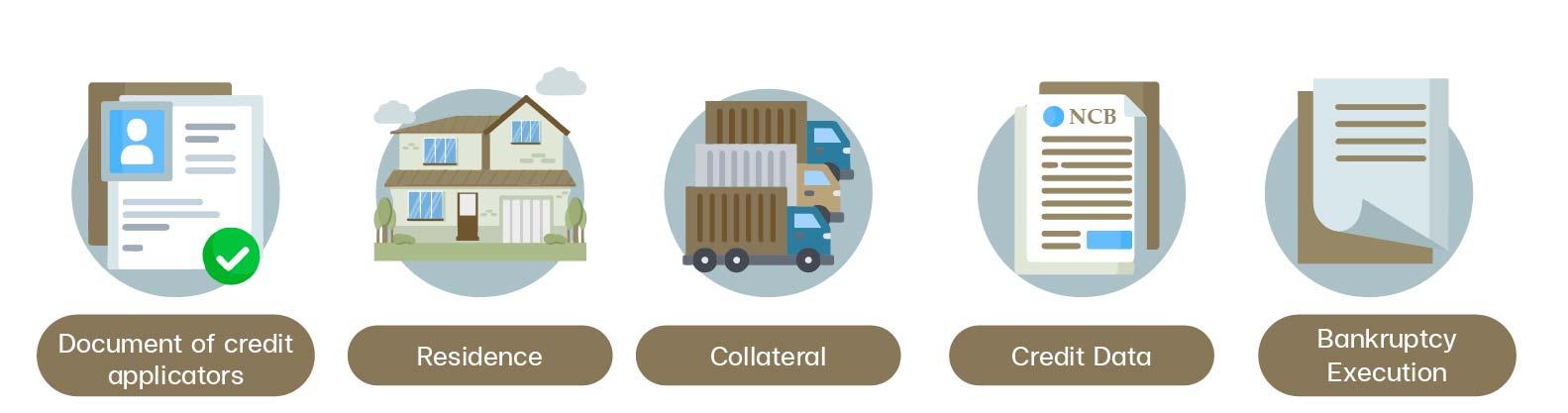
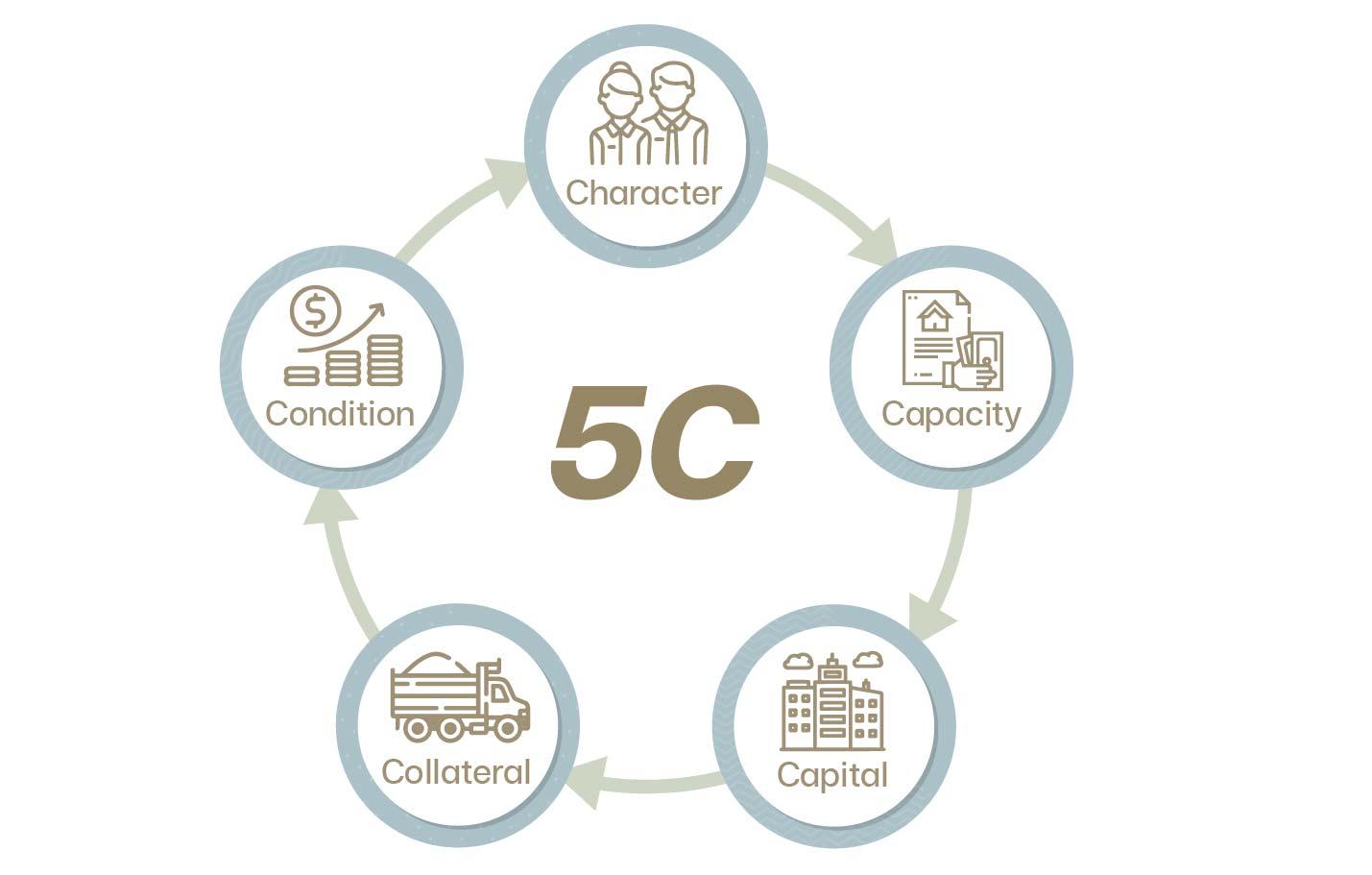 (1) Character: customer’s character is considered from the record of their installment payment in the past or the record of default which can be checked with the National Credit Bureau (or “NCB” or Credit Bureau), the bankruptcy records and the execution of purchase hirers.
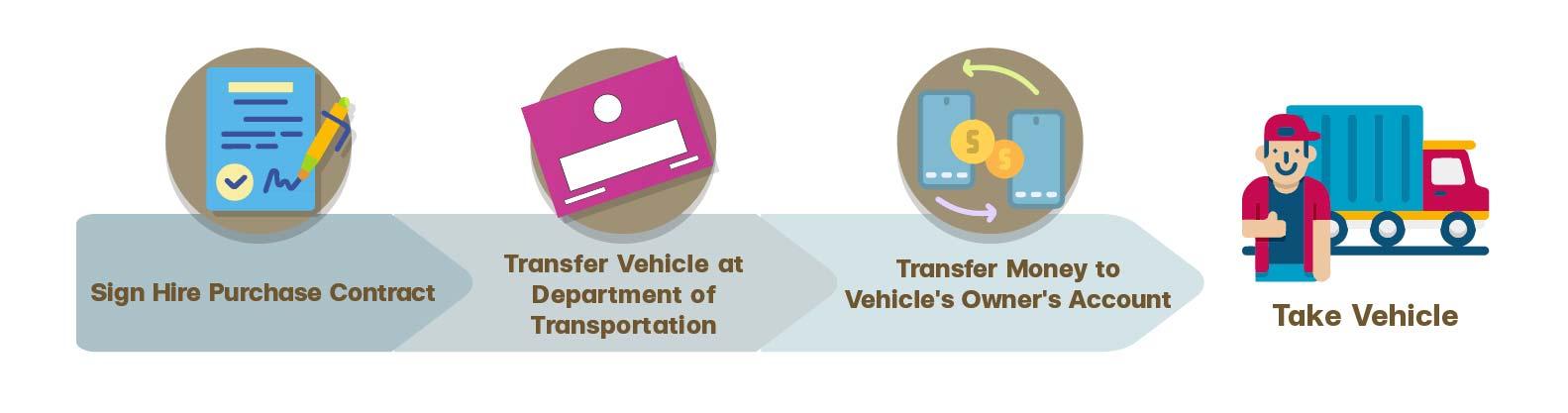 • Process of keeping contracts and collateral documents
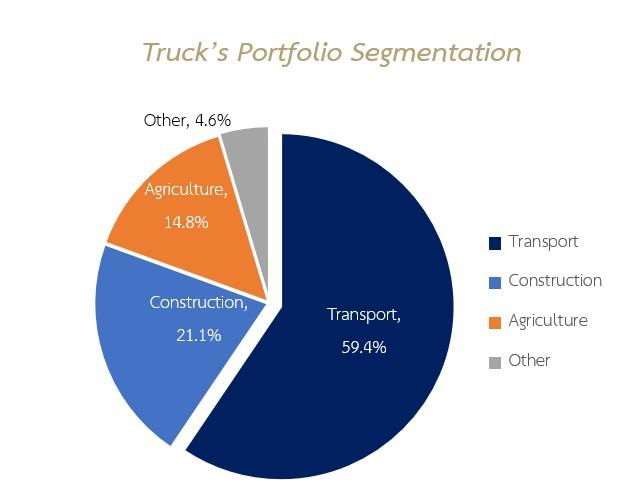
Research & Development
Has R&D Policy (Y/N)
Yes
R&D Cost — Description
Research and Development
The Micro Group has an IT team dedicated to studying and developing new technologies to enhance business operations and improve customer and partner experiences. The development projects focus on transitioning various processes to digital forms (Digital Transformation) and strategically investing to enhance IT capabilities.
The company aims to implement technology in critical business processes, such as customer acquisition, loan applications, credit assessments, loan approvals, customer service and relationship management, debt collection, loan portfolio monitoring, branch management, and internal work processes. In 2024, the company developed new technology systems to enhance operational capabilities, including the latest Mobile POS Application version 3.9 for loan officers to connect with the insurance broker system, e-consent processes for NCB/PDPA instead of paper, and various campaigns. Other systems include appraisal systems, credit analysis systems for additional customer history verification, an ERP system to replace the old system, RPA systems, BI systems, a Data Warehouse, and AI applications like Co-Pilot.
The company also focuses on IT security and personal data protection. The company has continually improved its IT security systems, achieving ISO/IEC 27001:2013 certification for the third year in 2024. AlphaSec Co., Ltd. was hired to assist in transitioning from ISO 27001:2013 to ISO 27001:2022, which will be completed in 2025. Furthermore, in 2024, the company enhanced information security and data leakage prevention (DLP) by implementing the Intelligent Threat Detection and Response Platform and Endpoint Detection and Response (EDR) system from SANGFOR, which works with the existing Firewall system to better control and prevent cyber attacks. Additionally, AI PLAYBOOK processes were developed on the Intelligent Threat Detection and Response Platform installed in 2024 to ensure necessary measures are taken to protect organizational data and prioritize data security. In December 2024, a ransomware virus attack simulation was conducted to test IT system readiness and evaluate SLA (Service Level Agreement) compliance.
In 2025, the company plans to seek ISO 29110 quality management certification (Software Engineering Lifecycle Profiles for Very Small Enterprises (VSE)) to establish systematic and global software development processes. Additionally, the company plans to update ISO/IEC 27001:2022 to replace ISO/IEC 27001:2013, ensuring user confidence, customer and partner security, and providing continuous education on cyber attack prevention through online and offline channels. The company will also continue to remind employees about cyber attack threats and conduct regular IT system recovery drills.
In 2025, IT system development will continue to enhance system efficiency for customer and partner services, focusing on developing systems to support network companies' businesses, such as MICRO Insurance Broker Co., Ltd.'s insurance sales system, personal loan services, customer and partner services via Line OA, and AUTO chat bot services. The company will adopt Hybrid Cloud technology, develop inter-company and external service provider data connections through API systems, and enhance automation using RPA technology. These developments aim to increase loan opportunities for target customers while reducing credit risks.
The company intends to utilize technological tools and create new platforms to develop customer and partner acquisition channels for both loan and insurance brokerage businesses, optimize risk analysis efficiency, and continuously improve online services to enhance customer experience and satisfaction.
Research and product development
Research and product development are essential processes for Micro Leasing Public Company Limited in creating differentiation and adding value for customers. Through detailed market research, quality product development, continuous testing and improvement, and effective product presentation, the company can maintain its market leadership and achieve sustainable customer satisfaction.
In the realm of research and development, the company focuses on utilizing data to conduct analyses and develop credit products tailored to the needs of target groups. The product development team compiles data and surveys customer service usage requirements.
In terms of services, the company analyzes the geographical location of partners to use as information for workforce planning, emphasizing convenience and prompt responsiveness to partner needs, ensuring high-quality service.
Regarding products, the company compiles both quantitative and qualitative credit analysis data to evaluate and devise strategies for effective sales promotion. Additionally, the company conducts ongoing monitoring and assessment to design special programs for high-quality partners (Preferred partners).
R&D Cost — Label
Research and development (R&D) expenses over the past 3 years (Million Baht)
R&D Cost — This Year
0.0
R&D Cost — Last Year
0.0
R&D Cost — 2 Years Ago
0.0
Assets Used in the Business
Permanent Assets — Description
The major assets used in the business of the Company and its subsidiaries consisted of hire purchase receivables, land, buildings and equipment, and assets foreclosed.
Permanent Assets — Appraisal
| Asset | Ownership | Obligation | Appraisal Value |
|---|---|---|---|
| Hire purchase receivables | Company owned | Some were collaterals for loans | 3,183.1 |
| Loan receivables | Company owned | None | 56 |
| Land, building and equipment | Company owned | Some were mortgaged with financial institutions | 105.5 |
| Assets foreclosed | Company owned | None | 39.4 |
Intangible Assets — Description
As of December 31, 2025 the Company had one trademark and the Company was in the process of applying for trademark/service registration of 2 items
Intangible Assets — Appraisal
| Asset | Type | Appraisal Value | Description |
|---|---|---|---|
| Trademark | Trademark | 0 | As of December 31, 2025 the Company had one trademark ,Hire purchase vehicle service Item. |
| Trademark | Trademark | 0 | The Company was in the process of applying for trademark/service registration of 2 items |
Has Subsidiaries Investment Policy (Y/N)
Yes
Subsidiaries Investment Policy — Description
Micro Leasing Public Company Limited (the "Company") has established this policy for the governance and management of its subsidiaries and affiliates, with the objective of providing direct and indirect measures and mechanisms to enable the Company to govern and manage its subsidiaries and affiliates. This also includes monitoring to ensure that subsidiaries and affiliates comply with various measures and mechanisms set forth to protect the Company's investment interests in these subsidiaries and affiliates, as well as to comply with the Public Limited Companies Act, Securities and Exchange Act, The Securities and Exchange Commission, and The Stock Exchange of Thailand.
Marketing Policy & Competition
Reporting Mode
3117
Marketing Policy (Overall)
Pricing policy
• Interest rate
The company has a policy to set the hire purchase interest rate for each customer that reflects the risk of lending appropriately, considering economic, corporate governance, social, and environmental factors. From an economic perspective, the company considers factors such as the policy interest rate and the overall industry outlook. From a corporate governance perspective, the company has established responsible and fair lending criteria and communicated them to employees at all levels. From a social perspective, the company considers household debt, the risk of each customer based on credit scores, and the likelihood of default, taking into account age, occupation, credit limit, and payment history. From an environmental perspective, the company considers the age of the collateral, as older collateral tends to emit more unburned carbon gases than newer collateral. Therefore, the company sets a significantly higher interest rate and has a policy not to consider vehicles with engines below EURO I and II standards (according to the specified period).
• Credit limit
Generally, the company provides loan amounts at approximately 80% of the appraised value of the collateral, which depends primarily on the type, model, brand, age, and condition of the truck. The total hire-purchase loan amount, including accident insurance premiums and credit protection insurance, must not exceed 90% of the truck's purchase price or appraised value (whichever is lower) according to the current appraisal guidelines of the credit analyst department. The company reviews the appropriateness of the loan amount policy to align with changing economic conditions or industry circumstances. If there are changes from the previously established policy, the credit committee will propose the matter to the company's board of directors for approval.
• Installment amount and installment payment period
The Company shall define the amount of installment and term of payment in compliance with the ability to pay debts of customers, in consideration of the ability to generate incomes and Total Debt Service Ratio (TDSR) which should be at the appropriate level to reduce the risk of defaulted debt payment. The Company defines the minimum TDSR level which varies to the level of risks or net income of loan applicants with the criteria that after deducting total loans, the customer must have Residual Income enough for living. The customer group whose income is lower than 50,000 Baht per month is considered the sensitive income group. The Company will define the TDSR level of this group lower than other groups to reflect such risk. If the loan applicant’s TDSR does not pass the minimum criteria defined by the Company, the Company shall not approve the loan to such customer.
The term of payment depends not only on the ability to repay debts of customers but also on the age of the collateral trucks. The term of payment for a truck with less years of service is longer than an older truck. However, the term of payment shall not be longer than 60 installments. However, the company is in the process of considering extending the maximum installment period to not more than 72 installments.
Distribution Channels
Customers can contact the company for hire purchase loan services through 5 channels as follows:
1) Through Second-Hand Truck Dealers or Brokers Who Are Partners with the Company:
The company has nearly 430 second-hand truck dealers as partners nationwide, located in both metropolitan and provincial areas. Marketing and branch loan officers are responsible for contacting and maintaining relationships with these dealers, who are crucial in introducing hire purchase loan customers to the company. Approximately 80% of the company's annual loan issuance is provided through this channel. The company does not have any exclusive agreements or revolving credit arrangements with these dealers.
2) Through Recommendations by Broker Network:
The company has a registered network of over 250 brokers nationwide who are responsible for sourcing potential hire purchase loan customers. Approximately 10% of the company's annual loan issuance is provided through this channel.
3) Through Recommendations by Company Employees:
Loan officers stationed at branches nationwide meet and visit customers in various locations to promote and recommend the company's loan services, aiming to meet the branch's loan issuance targets.
4) Direct Contact with the Company or Its Branches:
Customers who become aware of the company through various advertising media such as print media, radio, and billboards can directly contact the company's branches or headquarters. As of December 31, 2024, the company has 12 branches nationwide, offering services Monday through Saturday from 8:00 AM to 5:00 PM.
5) Online Channel:
The company has developed and improved its services using a digital transformation strategy to meet specific consumer needs and adapt to the new normal, which increasingly relies on online transactions. Customers can contact the company through Facebook: https://www.facebook.com/Microleasing or Line official: @microleasing, enhancing consumer convenience. Individuals who bring loan customers to the company through various channels will receive a "commission," which is a percentage of the total interest under the contract, not exceeding the maximum commission per transaction set by the company. The rate varies by the type of referrer, and the commission is paid once when the customer meets the qualification criteria and enters a hire purchase agreement with the company. This commission is a one-time payment, non-recoverable, and aligns with general industry practices.
Industry & Competition (Overall)
Industry Conditions and Competition
The Thai industrial sector is projected to remain stable in 2025, a result of the low base from the previous year. This year's growth is supported by the expansion of the tourism sector, merchandise exports, and private investment, including foreign direct investment, particularly in target industries such as electronics, digital technology, automotive and parts, petrochemicals, and chemicals. Government economic stimulus measures, such as spending through programs like Easy E-Receipt and digital wallets, free visa programs to attract foreign tourists, and investment promotion measures, have also contributed to improved domestic consumption and employment. Meanwhile, the overall global economy remains positive, supporting Thai exports. This aligns with the accelerated negotiation of free trade agreements (FTAs) to open up new markets and the relocation of manufacturing bases to Thailand, which will enhance the competitiveness of the Thai industrial sector in the future.
However, Thai businesses still face complex structural challenges impacting their competitiveness, such as high production costs, high corporate debt and interest rates, household debt suppressing domestic purchasing power, the impact of Chinese goods flooding domestic and trading partner markets, and rapid technological change. This makes it difficult to adapt quickly. Furthermore, global economic volatility stems from geopolitical conflicts in the Middle East and the Russo-Ukraine war, as well as the uncertainty of the US-China trade war and the potential for increased non-tariff measures (NTM/NTB) and trade measures related to the environment. In addition, market competition has intensified, with more competitors in the region, and climate change presents challenges. These factors have continuously pressured Thai industries.
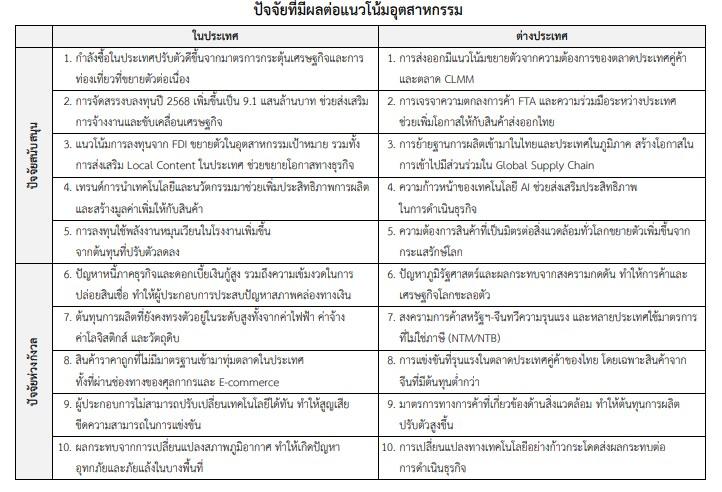
The adaptation strategy for the Thai industrial sector in 2025 will focus on adopting digital technology and AI in business operations, increasing production efficiency, coupled with developing innovative products to add value and upgrade product standards to be accepted in international markets. In addition, entrepreneurs are accelerating the adjustment of their business models to participate in the supply chains of targeted industries and building partnerships to ensure Thailand's presence in the global production chain (Supply Chain Security). Furthermore, there will be investment in renewable energy in production processes, business operations based on ESG concepts, and industrial development using the BCG model to achieve the Net Zero goal. The NCB views negative credit growth coupled with a weak economy as not a positive sign, fearing that debt will flow into the informal sector.Meanwhile, Dr. Laksamon Atthapich, Managing Director of the National Credit Bureau (NCB), or Credit Bureau, has observed that the stagnant growth of household debt and the contraction of formal credit figures may reflect people increasingly turning to informal lending sources. He stated, "From my perspective as an economist who has held this position my entire life, I'm not happy about this situation. If we look at the real economic situation today and say that household debt isn't growing, that's incorrect. It's more worrying that it might flow more into the informal sector." "Will informal loans with very high interest rates further exacerbate people's lives?" Dr. Laksamon also revealed that, according to household debt data collected through the NCB system at the end of 2025, the overall value of household debt for the entire year 2025 grew very little, less than 1%, reflecting that credit is not expanding and banks are lending less. The household debt graph therefore has the characteristics of a 'plateau' or is stagnant. As for the non-performing loan (NPL) situation, loans overdue for more than 90 days are on an upward trend, currently at approximately 9.6% of household debt. The trend is still climbing, but not very steeply. The loan of concern is auto hire-purchase loans. As for loans requiring special monitoring (SM), they fluctuate constantly due to various debt restructuring measures from the Bank of Thailand, which act as a buffer. This is according to the results of a survey on Thai household debt, conducted in collaboration with the Faculty of Economics, Chulalongkorn University, and Krung Thai Bank (preliminary data as of November 2025), which indicates that households still rely on... Informal debt is increasing, with the proportion of informal debt in the 2025 survey projected to rise to 14% from 12% of total household debt in 2024. This reflects the fact that real household debt remains at a level exceeding 100% of GDP. According to data from the Bank of Thailand, the latest household debt-to-GDP ratio in the third quarter of 2025 remained unchanged from the previous quarter at 86.8%. For the fourth quarter, the debt-to-GDP ratio is expected to continue 'declining' as the denominator (GDP) increases, according to data recently released by the National Economic and Social Development Council (NESDC), while the numerator (overall loans) remains unchanged.
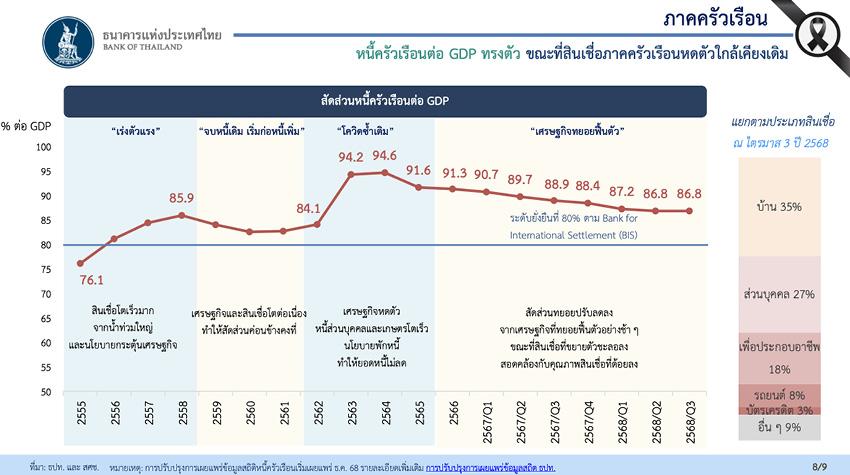
As for business trends in 2026, the Bank of Thailand expects slight growth from the same period last year, driven by the electronics parts manufacturing and export business which continues to benefit from the upward cycle, the expansion of data centers and AI-related industries, as well as the service and tourism businesses which are expanding due to the increasing number of foreign tourists as a result of the increased number of flights. (1) The strengthening of the Thai baht affects the competitiveness of export-oriented manufacturing businesses, as well as the decision-making of foreign tourists in choosing their destinations. (2) Uncertainty regarding US tax policies, such as reciprocal tariffs and transshipment taxes. (3) Clarity in the formation of a new government and the implementation of economic stimulus measures to restore domestic purchasing power. (4) The unrest on the Thai-Cambodian border. (5) Conflicts in the Middle East affecting energy and production costs (Energy & Cost Channel): The Ministry of Finance expects that the price of crude oil in the global market may fluctuate and increase.
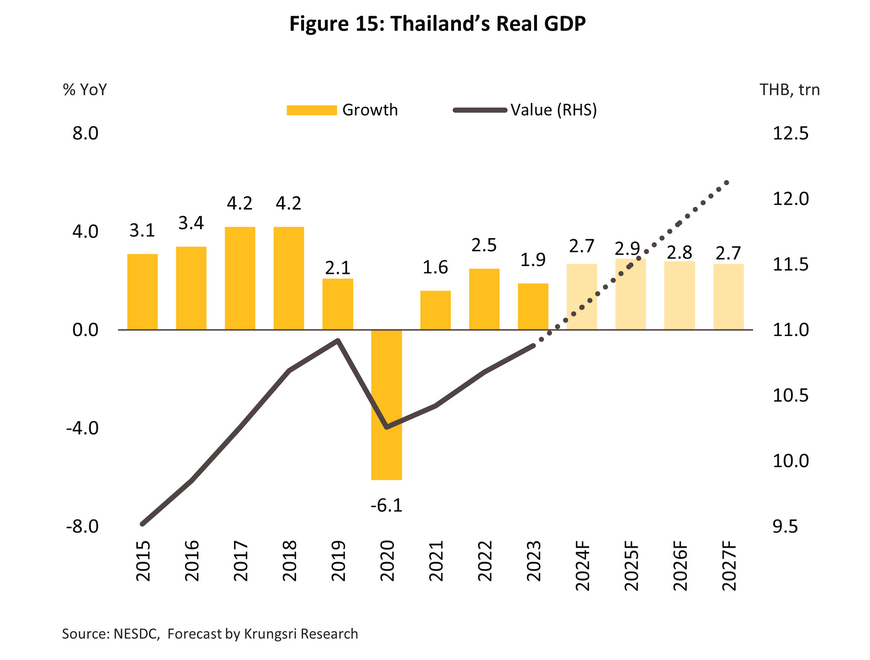
Procurement of Products & Services
Reporting Mode
3117
Procurement (Overall)
The description of how products were obtained for sale in the past year
Source of funds
The sources of funding used to expand the company's loan business come from borrowing from financial institutions, loans from related parties, other individuals, and the issuance of debentures. The details are as follows:
Sources of funds* | 2023 | 2024 | 2025 | |||
THB million | % | THB million | % | THB million | % | |
Loans from financial institutions | 308.7 | 5.9 | 364.6 | 8.6 | 426.9 | 12.9 |
Loans from connected persons | 80.0 | 1.5 | 130.0 | 3.1 | 130.0 | 3.9 |
Loans from other persons | 310.0 | 5.9 | 260.0 | 6.1 | 150.0 | 4.5 |
Debenture | 2,384.0 | 45.7 | 1,470.0 | 34.8 | 542.6 | 16.4 |
Shareholder’s fund | 2,131.5 | 41.0 | 1,998.1 | 47.4 | 2,063.6 | 62.3 |
Total source of funds | 5,214.2 | 100.0 | 4,222.7 | 100.0 | 3,313.1 | 100.0 |
Unused credit limit | 999.0 | 639.0 | 705 | |||
* Excluding deferred debenture issuance costs
Note: The above sources of funding do not include liabilities under hire purchase agreements, as they are insignificant in amount, nor do they include other liabilities such as trade payables and accrued income tax, as these liabilities arise from normal operations.
As of December 31, 2025, the group had loans (before deducting allowance for expected credit loss) amounting to 2,558.1 million Baht. The sources of funding included shareholders' equity, which comprised paid-up capital, legal reserves, and retained earnings totaling 2,063.6 million Baht, accounting for 62.3% of total funding. Debentures amounted to 542.6 million Baht, representing 16.4% of total funding. Borrowings from financial institutions amounted to 426.9 million Baht, accounting for 12.9% of total funding. Loans from related parties amounted to 130.0 million Baht, representing 3.9% of total funding, and loans from other individuals amounted to 150.0 million Baht, accounting for 4.5% of total funding.
However, the company has been gradually reducing the proportion of loans from directors or shareholders. Additionally, the company has sourced additional funding from other sources, such as issuing debentures and promissory notes, enabling the company to manage operational liquidity adequately. The company continues to repay loans from directors and related parties.
2 Liquidity Management
From the financial position structure of the Company at present, most of the Company’s source of funds consists of the fund from the owner and the short-term and long-term loans for business operations including loans from financial institutions, loans from external persons, and loans from shareholders, directors or persons involving those people. Most loans’ period of payment is within 1-3 years. The main business of the Company is the hire purchase loan service of which the contract payment period is 4-5 years resulting in the Maturity Mismatch. Moreover, there is also the interest rate mismatch since the interest rate that the Company receives from the hire purchase contract is Fixed Rate while some loans’ interest is the floating rate, which goes up and down along the country’s economic condition.
The company places great importance on liquidity risk management to reduce the risk of being unable to meet its debts and obligations when due, or being unable to secure funding in a timely or sufficient manner to meet capital needs for business expansion. Alternatively, securing funding at an unacceptably high financial cost could impact the company's revenue and performance.
As of December 31, 2025, the company's total borrowings amounted to 1,249.5 million Baht, with the repayment schedule as follows:
Debt obligation to be repaid* (Liabilities) | 2023 | 2024 | 2025 | |||
THB million | % | THB million | % | THB million | % | |
Within 1 year/1 | 1,240.4 | 40.2 | 1,281.6 | 57.6 | 652.4 | 52.2 |
Over 1 year but not over 2 years | 1,218.0 | 39.5 | 599.7 | 27.0 | 426.0 | 34.1 |
Over 2 years but not over 3 years | 536.0 | 17.4 | 321.6 | 14.4 | 151.3 | 12.1 |
Over 3 years | 88.3 | 2.9 | 22.1 | 1.0 | 19.8 | 1.6 |
Total | 3,082.7 | 100.0 | 2,225.0 | 100.0 | 1,249.5 | 100.0 |
* Excluding deferred debenture issuance costs
/1 Consisting of short-term loans and long-term loans—the portion due within 1 year from financial institutions, related parties, other individuals, and debentures, as shown in the company's statement of financial position.
Considering hire purchase receivables as of December 31, 2025, excluding receivables overdue by more than 3 months and those undergoing legal proceedings, the Company will have installments due as follows:
Hire purchase receivables (Excluding NPL) | 2023 | 2024 | 2025 | |||
THB Million | % | THB Million | % | THB Million | % | |
Within 1 year | 1,435.5 | 30.3 | 1,120.4 | 34.7 | 943.3 | 39.2 |
Over 1 year but not over 2 years | 1,159.2 | 24.5 | 909.5 | 28.2 | 665.5 | 27.7 |
Over 2 years but not over 3 years | 1,086.4 | 23.0 | 609.8 | 18.9 | 451.3 | 18.7 |
Over 3 years | 1,050.2 | 22.2 | 589.8 | 18.2 | 345.3 | 14.4 |
Total | 3,664.0 | 100.0 | 3,229.5 | 100.0 | 2,405.4 | 100.0 |
As of December 31, 2025, the Company had loans due within 1 year of 652.4 million baht, including debentures of 280.2 million baht, loans from financial institutions of 164.5 million baht, loans from related persons of 150.0 million baht, and loan from other individuals of 50.0 million baht, which were higher than the amount to be received from debtors within 1 year, which was 943.3 million baht.
The short-term loan from another financial institution is a revolving credit facility, which allows for new borrowing up to the credit limit upon repayment. Additionally, loans from related parties and other individuals have consistently provided strong financial support to the company. The company has never been called for the repayment earlier than the due date and can renew the loan contract continuously.
In addition, considering the long-term loans with over 1 year but not over 3 years due of 577.3 million baht and the amount to be received from the over 1 year but not over 3 years receivables of 1,116.8 million baht, the long-term loans due over 3 years in the amount of 19.8 million baht, and the amount received from debtors over 3 years in the amount of 345.3 million baht, the company will have enough funds for loan repayment in the long term. Additionally, the Company has a policy to restructure its borrowings from financial institutions to increase the proportion of long-term loans to align with the Company's loan period.
The company recognizes the importance of liquidity management and has assigned the accounting and finance department to evaluate the company's financial status and forecast liquidity at least 30 days in advance to assess net liquidity and the company's liquidity outlook. This evaluation considers various factors that may impact business operations in the near future, to report to the executive committee in a timely manner.
Furthermore, the company has a policy to appropriately restructure its finances. In sourcing future funding, the company may consider increasing the proportion of funding from financial institutions to match the company's liquidity needs when necessary. Such funding may include long-term loans with fixed interest rates to align with the repayment period of debtors and to mitigate the risks of interest rate fluctuations and funding mismatches with future cash inflows. The Company will consider the appropriate balance between short-term and long-term borrowings, in line with market conditions and the Company's repayment capacity. The company will continue to manage these risks prudently, considering the appropriateness of financial costs, repayment periods, and maintaining financial ratios within specified limits. Additionally, the company plans to diversify its funding sources, such as issuing debt and equity instruments, to effectively manage financial costs and liquidity risks.
Projects Under Construction
Has Projects Under Construction (Y/N)
No
Debentures & Bills of Exchange
Introduction
As of December 31, 2025, the company issued long-term debentures for sale, which are named debentures, unsubordinated and unsecured, with a debenture holder representative. Additionally, there are high-risk debentures with insurance and a debenture holder representative. The issuer of the debentures has the right to redeem the debentures before the maturity date. Interest payments are scheduled every 3 months as follows:
Has Debentures (Y/N)
Yes
Debentures
| Debenture Name | Description / Rating | Interest Rate (%) | Outstanding | Maturity Date | Term | Types |
|---|---|---|---|---|---|---|
| MICRO269A II/HNW | (Unit:Million Baht) | 6.5 | 249.9 | Sep 1,2026 | 3Y 3M | 2789 · Description: Senior Debenture |
| MICRO277A II/HNW | (Unit: Million Baht)
High-risk debentures with insurance have a debenture holder representative. The issuer of the debentures has the right to redeem the debentures before the maturity date. | 6.8 | 169.6 | Jul 10, 2027 | 2Y 9M | 2789 · Description: Senior Debenture · 2790 · Description: Secured Debenture |
| MICRO264A II/HNW | (Unit: Million Baht)
High-risk debentures with insurance have a debenture holder representative. The issuer of the debentures has the right to redeem the debentures before the maturity date. | 6.5 | 30.3 | April 30,2026 | 1 | 2789 · Description: Senior Debenture · 2791 · Description: Unsecured Debenture |
| MICRO271A II/HNW | (Unit: Million Baht)
High-risk debentures with insurance have a debenture holder representative. The issuer of the debentures has the right to redeem the debentures before the maturity date. | 6.5 | 21.5 | Jan 30,2027 | 1.9 | 2789 · Description: Senior Debenture · 2790 · Description: Secured Debenture |
| MICRO281A II/HNW | (Unit: Million Baht)
High-risk debentures with insurance have a debenture holder representative. The issuer of the debentures has the right to redeem the debentures before the maturity date. | 6.8 | 71.3 | Jan 30,2028 | 2.9 | 2789 · Description: Senior Debenture · 2790 · Description: Secured Debenture |
Convertible Securities
Has Convertible Securities (Y/N)
No