

Risk Management · 2025
In this section2 topics
Risk Management Policy & Plan
Policy & Plan Description
Risk Management
The company remains committed to focusing on raising awareness and fostering a risk management culture within the organization to benefit all stakeholders by creating added value and generating sustainable returns, while balancing risk, cost, and return. The company has established appropriate policies, principles, processes, best practices, and an acceptable risk management framework to cover as many risks as possible across all risk areas, including internal and external risks. Examples of significant risk management include credit risk, market risk, liquidity risk, information technology risk, strategic risk, reputational risk, legal and compliance risk, operational risk, and emerging risk (risk that may arise or evolve depending on changing circumstances and environments). The company is increasingly prioritizing a risk management process that adheres to international standards, comprising steps from risk identification and measurement to risk assessment, continuous risk monitoring, and risk control. This ensures that risk remains at an acceptable level within the company's constraints and allows for appropriate business operations. A Risk Management Committee and various sub-committees and working groups, in conjunction with management, oversee, review, and provide recommendations on risk management policies and a sound risk governance framework, as well as monitor overall risk management for presentation to the Board of Directors. The Risk Management and Corporate Governance Department is responsible for overseeing and supporting risk management within the company and its subsidiaries within the group. This department is independent of any business unit or business activity related to risk.
The risk management structure.

The Board of Directors assigns the Risk Management Committee, Audit Committee, Nomination and Remuneration Committee, and the management team, including the Risk Management and Corporate Governance team, to collaborate with relevant operational units in monitoring and managing various risk issues to ensure they remain at an appropriate level. This process aligns with legal regulations and established criteria while adapting effectively to evolving circumstances.
The company adopts the principles of good corporate governance for listed companies set by the Securities and Exchange Commission and the guidelines provided by the Thai Institute of Directors Association. These principles and related practices form the foundation of the company's governance framework.
The management structure is designed to ensure transparency, balance, and accountability. The company adheres to international practices under the "Three Lines of Defense" principle, which includes business units, regulatory units, and internal audit units. The latter operates independently from management and oversees the company's operations to comply with relevant laws and regulations. These three units work together in a coordinated process defined at each level.
First Line of Defense: Business units are responsible for the daily management of operational risks, ensuring that risks are effectively considered and controlled. This includes conducting business operations in compliance with laws and company regulations.
Second Line of Defense: Supervisory units, such as the Risk Management Unit, oversee, monitor, and control risk management processes. Additionally, transaction regulatory units ensure that the company’s operations comply with relevant laws.
Third Line of Defense: The Internal Audit Unit evaluates the adequacy and appropriateness of internal control systems in operational processes and various company systems. Their role is to support the establishment of good corporate governance, effective risk management, and internal control systems that align with the company’s objectives and goals.
Principles of Risk Management
The principles of risk management for the company and its subsidiaries within the group are based on the following key principles:
1. The Risk Owner unit has primary responsibility for managing risks arising within or from the activities of its own unit.
2. Risk control is implemented through collaboration between the Risk Owner unit and units independent of the business unit.
3. Risk control is maintained at an acceptable level, broken down into sub-approaches based on level:
Sub-approach Level 1: This level is determined by the Risk Owner unit itself, or the unit owning the operational process or the operational unit that is the Risk Owner and is responsible for overseeing, monitoring, and controlling internal risks within its own unit to ensure good internal governance at an appropriately acceptable level.
Sub-approach Level 2: The Risk Management and Corporate Governance unit is responsible for overseeing, monitoring, supporting, and providing advice and recommendations, as well as developing tools and processes to support effective risk management and corporate governance in collaboration with other relevant units, such as the IT unit and the legal unit, etc., to ensure that risks are at an acceptable level and that oversight, monitoring, and review are carried out to ensure that the operations of the company within the group comply with the risk management policy and regulations from regulatory agencies. The Risk Management and Corporate Governance unit is clearly independent and separate from the unit that owns the risk.
Sub- approach Level 3: Internal Audit Unit is responsible for auditing risk management practices and internal audits.
From the above principles, in addition to the importance of the Risk Management and Corporate Governance unit, the business units involved in the operational process are even more crucial to risk management. Furthermore, it is not only the management level that needs to take this seriously, but also every employee of the business unit that owns the process and is the one performing the work at the point where the risk arises. Therefore, all personnel must strictly adhere to the risk management policy guidelines.
Risk Reporting
Risk reporting is prepared for presentation to the Board of Directors, Audit Committee, Risk Management Committee, sub-committees, and relevant working groups as follows:
1. Regular and quarterly reports on the overall risks of the company and its subsidiaries within the business group.
2. Regularly and promptly reporting observations, early warning signals, and analysis of potential impacts from changes in regulations, technological changes, and emerging risks, including recommendations for adaptation, mitigation, or appropriate response strategies.
3. Risk Assessment: In addition to assessing significant risks directly and indirectly impacting business operations as previously mentioned, the company has additional approaches to managing risks at an appropriate level. This begins with the launch of new products or when significant improvements, developments, or changes to operational processes or systems are implemented. All relevant departments must conduct a comprehensive risk analysis, assess the risk level, and determine appropriate risk reduction strategies before commencing any action. Follow-up and evaluation after implementation are conducted to review and ensure the risk level remains appropriate and timely to changing business circumstances.
The company has established policies, operational procedures, and developed process-specific manuals covering all departments, including a control and monitoring system. The company reports on various risk levels, including the segregation of responsibilities and the definition of risks in accordance with good internal control principles. Furthermore, it emphasizes the accurate and complete disclosure of risk management information on a regular basis. The company has identified three main key risks under good governance, as follows:
The company has established policies, operational procedures, and developed process-specific operation manuals to cover all departments. This includes control systems, monitoring mechanisms, and risk level reporting across various areas. Responsibilities are divided appropriately, and risks are defined in alignment with good internal control principles. Furthermore, the company emphasizes the importance of accurate and comprehensive risk management disclosures on a regular basis.
The company has identified three key risk areas under good governance, as follows:
1.Credit Risk Management
The majority of the company's loan customers are individuals who cannot access credit services from commercial banks. Consequently, loans extended to the company's customers may carry a higher risk of defaults or non-performing loans compared to borrowers with good credit histories. This risk is further impacted by changes in economic conditions, legal amendments, policies, and/or regulatory guidelines.
Since 2022 to the present, the company has had to pay increased attention to credit risk. Overall, the level of credit risk remains under observation due to ongoing impacts from the COVID-19 pandemic and other factors, such as economic conditions, rising inflation, increased oil prices, and climate and environmental issues. These factors have led to higher living expenses and business costs, causing an upward trend in default rates. To manage the company's credit risk at an appropriate level, it is necessary to adjust policies and processes for loan approvals and debt monitoring in alignment with current and future situations and trends.
1.1 Development of Systems and Efficient Loan Approval Processes
The company continuously reviews policies, criteria for loan application documentation, and loan approval processes to enhance efficiency and stay aligned with changing circumstances. This ensures the most accurate reflection of customers' repayment capacity. The company is also focused on developing systems related to loan evaluation to effectively manage data across all stages, including the loan application process, internal and external data verification, the use of statistical methods for loan assessment, and post-loan approval management. The company incorporates credit information from the National Credit Bureau Co., Ltd. (NCB) as part of the evaluation of the creditworthiness or repayment ability of every customer. This is done alongside other assessment factors and the verification of data obtained from reliable sources to ensure that the loan approval process is efficient and adheres to the company’s credit policies at both the branch and head office levels.
1.2 Guidelines for Debt Collection or Disposal of Assets for Debt Repayment
While customer payment delays or inability to pay for installments as scheduled can occur due to various factors and are a normal part of business operations, the company is focused on efficiently managing debt quality. This includes assisting customers facing difficulties, implementing appropriate measures for notifications, inquiries, and debt collection based on risk levels and arising situations. Communication channels include contacting customers by phone, sending notifications via text messages, postal follow-ups for long-overdue debts, and field visits either by the company's internal staff or external debt collection agents. These visits are conducted to meet customers, gather information, assess impacts, and provide assistance to customers in difficulty. Additionally, the company may pursue legal processes or actions as outlined in leasing agreements, such as reclaiming collateral like trucks, trailers, or other assets specified in contracts. These assets are disposed of through various means, including public auctions by external entities or direct sales by the company. The proceeds are used to offset remaining debts, with any surplus refunded to the customer. The company places great importance on fairness in debt collection practices while adhering to legal regulations, corporate rules, and governmental policies.
1.3 perational Risk Management
The company emphasizes the importance of operational risk awareness and management under crisis situations by preparing plans to handle crises comprehensively. This ensures adequate resource allocation to support critical activities, including workplace facilities, personnel, and health and mental well-being management, to reduce work-related stress and promote employee health.
Moreover, the company encourages knowledge dissemination and skill development through training opportunities from credible external organizations or internal knowledge-sharing activities. The aim is to foster efficient and effective work processes for all stakeholders and cultivate a culture of continuous self-improvement and knowledge-sharing among personnel.
Operational Risk Management Guidelines
The company has implemented policies and operational risk management practices, which are regularly reviewed. These encompass all work processes to promote risk management awareness and enable effective risk control or reduction. The guidelines cover everything from risk prevention to the assessment of risks stemming from internal and external factors and plans for managing risks when they occur. The details are as follows:
1.The company conducts and reviews Risk and Control Self-Assessment (RCSA) at least once a year. This includes risk identification, evaluation, monitoring, control, and reporting. Each department evaluates risks, control methods, and the effectiveness of tools used for risk management. The maximum acceptable level of operational risk or damage caused by operational risks is established. Departments compare key indicators against acceptable damage levels and report to management and senior executives monthly.
2.Operational risks and losses are managed using the Loss Data tool to assess impacts and control damages. The company identifies the causes of incidents, mitigates damages, and establishes preventive measures. These address impacts on customers, tangible assets, reputation, personal data, and compliance with legal regulations. Communication processes ensure consistent reminders and regular reporting of incidents every month.
3.The company tests and reviews its Business Continuity Plan (BCP) annually. This involves evaluating potential scenarios comprehensively, prioritizing critical processes, updating employee contact details annually or during significant structural changes, conducting Call Tree Testing, and using group communication platforms like Line Application. Policies for minimizing operational disruptions and their impacts are developed, focusing on operational, financial, legal, reputational, and other significant areas.
4.Regular testing of BCP and emergency plans, covering operations and IT, is conducted. Issues identified during testing are reviewed to prevent recurrence during actual crises. An Alternate Site is maintained for use during emergencies, ensuring critical functions continue seamlessly. The site is equipped to support essential transactions and activities effectively.
5. Anti-Bribery and Anti-Corruption Measures
5.1The company expresses its intention to join the "Thai Private Sector Collective Action Against Corruption" (CAC) network, aiming to receive CAC membership certification by 2024. Preparations include annual self-assessments to develop anti-bribery and anti-corruption systems. In 2023, internal audits were conducted to ensure readiness and compliance.
5.2 The company has established strict anti-bribery and anti-corruption policies, prohibiting the acceptance or offering of bribes and incentives. Policies also cover risk-prone activities, such as gifts, entertainment, donations, political contributions, and facilitation payments, reviewed annually.
5.3 Communication of these policies is prioritized both internally and externally. Continuous internal communication is carried out through company channels, and diverse methods for reporting concerns or complaints are provided for employees and stakeholders via the company’s website.
Risk Factors
Micro Leasing Public Company Limited ("the Company") operates a business providing hire-purchase loans for second-hand trucks, such as six-wheel trucks, ten-wheel trucks, trailers, and tractor trucks. The company has a policy of granting loans exclusively for trucks that are in high demand, such as ISUZU, HINO, and FUSO brands. Loan terms range from 12 to 60 months, with fixed interest rates throughout the contract term (Flat Rate). Additionally, the company offers other financial services or loans to meet customers' financial needs, such as liquidity enhancement loans, which use truck registration documents as collateral (ownership transfer). These loans complement the hire-purchase services and refinance loans for existing customers with good repayment histories who require additional financial liquidity. For every hire-purchase agreement, customers must transfer ownership of the truck to the company and hand over the registration documents as collateral. The company provides its services through 12 branches covering all regions of Thailand. Furthermore, it collaborates with partners, including second-hand truck dealerships and brokers nationwide, who can offer advice and facilitate the company's loan services. The company's primary target customers are transport operators in industries such as agricultural products and construction materials. These customers often face limited opportunities and options to access funding sources. Aside from hire-purchase loans for second-hand trucks, the company also provides related services, such as coordinating and renewing insurance policies and motor vehicle acts.
The company's key risk factors can be divided into four main categories as follows:
Risks associated with operating hire-purchase loans for second-hand trucks
Risks arising from changes in regulations, laws, criteria, and business-related rules
Cybersecurity and technological risks
ESG (Environmental, Social, and Governance) risk management
Risks of default by retail borrowers stems from economic conditions, sluggish market conditions, and the problem of a large inventory of used trucks, which affects the appraisal price and approval of collateral, etc.
The details of these risk factors, along with the company’s risk prevention measures, are summarized as follows:
1.Risk from operating a used truck hire purchase business
1.1 Risk from approving hire purchase loan for used truck
The Company has primary risk from hire purchase loan for used truck, such as risk of debtor quality and risk of collateral quality.
1.Risk of debtor quality or risk from non-performing loan
Since the Company’s primary target group is the end users who want to hire purchase used trucks to earn incomes from their occupations, the Company receives the risks from their sensitivity to the domestic economy. If there is any negative change in relevant industries, such as transportation industry, agricultural industry, or construction industry, the ability to repay debt of debtors can be decreased. As a result, the Company’s Non-Performing Loan or NPL will increase which is considered the significant risk. If debtor is unable to pay the installment on the due date, the Company may face the risk to lose a partial or the whole amount of principal if the Company cannot confiscate the collateral from debtor. This shall have impact on the ability to generate incomes and business performance of the Company.
To reduce the risk in such matter, the Company has a policy to give importance to the concise loan consideration. The process of loan consideration has been continuously improved and developed. For example, the Company has concretely set up the credit policy, the assessment of customer’s ability to repay debt, the consideration of hire purchase objectives, the consideration of guarantor quality and the regularly review of the hire purchase policy. The Company, cooperating with National Credit Bureau (NCB), uses Credit Bureau information in loan consideration to screen customers more efficiently and uses the Credit Scoring Model as a tool for loan quality assessment which covers the source of income, domicile and address of loan applicant and surety. The bankruptcy information shall also be checked via website of the Government Gazette Office. Moreover, the Company uses customer data base system in the credit portfolio analysis in doing the Cross-selling to help customer who has good record of payment receive good offer of other suitable credit products.
In addition to the concise and concrete loan consideration, the Company gives importance to the efficient debt collection by assigning an internal unit to send a reminder message to customer before the due date of installment payment to prevent delayed payment. In the case that customer has one or more installment outstanding, the Company will call and issue reminder letters to customer. If the Company cannot reach customer, a branch officer will go to the area to find debtor or surety to discuss the problem. Moreover, the management has regularly monitored the outstanding status of debtor every month and has set a policy to pay commission to branch officers based on the non-performing loan ratio.
Moreover, the Company started to expand customer base in consumer goods transportation sector because consumer goods are necessary in daily life. Their demand and supply are not seasonal. The Company’s hire purchase customers who are transportation operators have consistent incomes and can continuously repay the installments. With the policy mentioned above.
In 2024, the company had hire-purchase debtors who were either non-delinquent or overdue by no more than 90 days, amounting to 3,229.5 million Baht, accounting for 95.10%. Meanwhile, non-performing loans (NPLs) exceeding 90 days totaled 168 million Baht, representing 4.94% of total hire-purchase debtors. The quality of hire-purchase debtors was partly affected by ongoing issues such as household debt burden and economic challenges, which have reduced the repayment capacity of the debtors. The company has fully provisioned for expected credit losses, including non-performing loans. Currently, the company is focused on continuously improving its credit scoring model to better reflect debtors' repayment capacities. Additionally, the company emphasizes close and consistent follow-up and debt collection efforts, particularly for NPL debtors, to enhance repayment collection. The company also provides advice and assistance to affected debtors by restructuring debts to help them regain quality debtor status.
2.Risk of collateral quality
The risk from operating a used truck hire purchase business is not limited to the debtor quality like the risk from new truck hire purchase business. The Company also has the risk of collateral quality. Since collateral of hire purchase loan is used truck, its condition has aged by its years of usage. In addition, some trucks may be cut and recomposed, or their structure may be modified. If the Company cannot inspect or assess the collateral truck condition correctly, the approved credit limit could be over the true value of the collateral and thus result in the Company’s credit loss significantly when debtor cannot repay the debt. As a result, the Company’s financial status and business performance shall be affected. However, the experiences in used truck hire purchase business for over 29 years contributed to the Company’s management team and personal who are full of experiences and specialization in condition inspection and price appraisal of used trucks. The Company can define the appropriate credit limit according to the collateral’s condition and value. Moreover, the Company also has a policy to support hire purchase loan service only for used trucks of which models and brands are popular and well accepted in the market such as ISUZU, HINO and FUSO etc.. The selection of used truck tent operators who meet the standard and sell quality trucks helps the Company screen the quality collaterals in a way. And at present, the credit term is consistent with the ability to repay debt. And the age of the trucks used as collateral.
1.2 Risk from business competition that may increase in the future
At present, there are not many operators in used truck hire purchase market. However, since this business is not under the control and governance of any government agencies, anyone who has funding for credit can enter business easily. This may lead to the higher business competition in the future which may affect the growth of credit portfolio and performance of the Company.
However, the hire purchase loan for used truck business is the business that needs knowledge and specialization of used truck inspection. The Company estimates that the chance of new players to enter the market and create severe competitiveness is not high. With the experienced team in hire purchase loan for used truck business for over 29 years and the network of branches and partners all over the regions throughout the country, the Company is confident in its competitiveness against both old and new operators.
1.3 Risk from depending on personnel with experience and expertise in used truck hire purchase business.
Providing hire purchase loan for used truck service, the Company needs personnel who have experience, knowledge, and expertise in various aspects, such as marketing officers who have good relationship with used truck tent operators and agents who recruit quality customers, credit and collateral price appraisal analysts who have expertise in business to appraise quality and price of collaterals which mostly are more than 6 years old trucks with depreciation according to usage and have understanding in the main customer group who are transportation operators in various business sectors in order to be able to assess the quality of debtor correctly and concisely. Thus, the Company has risks from relying on the knowledge, expertise and experience of executives and key working team in managing business. If such personnel are absent, the Company’s business operation can be affected in the short term which can cause a mistake in credit consideration or appraisal of collateral value and debtor quality, resulting in the negative impact on the Company’s financial status and performance.
However, the Company has set the clear target to motivate its executives and employees to continuously work with the Company in the long term. The executive team and key personnel in various departments have been working with the Company since the beginning of business. The Company also has a policy to transfer knowledge and experience through training courses for employees of all levels to build the working team with high potential to support the Company’s efficient operations.
1.4 Risk from collateral collection
Since the assets used as collaterals in loan application of the Company are trucks used in business operation which are movable assets at any time, the Company has a risk of losing track of collateral collection when debtor makes defaulted payment. The Company will then lose principal and interest that debtor does not repay at once which shall affect the Company’s financial status and business performance. To reduce such risk, the Company has a policy to approve loans only for customers with domicile and residential address and their collaterals must be registered within the branch area so that the branch officers can check customer’s information, source of income, and assess the ability to repay debt efficiently. Moreover, the Company has a policy of debt collection which is efficient and in accordance with legal requirement, such as sending a message to remind customers of the installment payment before the due date, calling and sending reminder letters when the installment is 5 days up overdue. The collateral survey and tracking will be started as soon as the debtor does not pay 1 or more installments to reduce the risk that debtor will take collateral out of the area before the agreement is cancelled. In addition, the Company has a network all over the country to help the efficiency of collateral collection. The Company also hires outsourcing collection team to track the collaterals at the places where customers provide transportation service, such as factory, residence, etc.
1.5 Risk from selling foreclosed assets
Since the Company’s collaterals are used-for-work trucks that have specific usage in relevant industries, the Company may have risk in the delayed disposal of foreclosed assets or may not be able to sell such assets at the specified price or not worth the remaining debt, which shall give negative impact on the Company’s financial status and business performance.
To reduce such risk, the Company has revised the policy of foreclosed assets management by focusing on the fast and efficient disposal of assets to reduce the impact from decreasing selling price. The Company shall communicate the detailed information of confiscated trucks, such as truck photos and offering prices, to the target group, that is, used truck tent operators who are business partners of the Company and have introduced hire purchase loan customers to the Company. The confiscated truck information will also be publicized on the Company’s website as another sales channel. All confiscated trucks shall be gathered in the parking lot located on Pholdamri road, Kampangsan district, Nakorn Pathom provice, which is the main road that transportation operators use as a transport route, to increase the opportunities to reach target group who are interested in buying used trucks. Moreover, the Company defined the policy to approve used truck hire purchase loans only for the trucks that are popular in the market and easy to trade. The credit limit mostly approved is approximately 70-85% of the collateral’s appraisal price. In the case that the truck selling price is lower than the debt, according to the hire purchase agreement, the Company can claim the remaining difference from debtor. Thus, the chance that the Company will get significant loss from the disposal of foreclosed assets is slim.
1.6 Risk of Loss or Failure to Return Important Documents to the Secure Storage Room
In the business of providing hire-purchase loans for used trucks, legal documents, including original vehicle registration books—documents proving ownership of collateral—are crucial for operations and legal proceedings in case of loan default. If these documents are lost or not returned to the secure storage room, it could negatively impact the company's business processes and performance.
To mitigate this risk, the company has changed the storage of important documents and registration books from branches to a central location. This includes hire-purchase agreements, duplicate and original copies, and vehicle registration books, all stored using a standardized Custodian system to track and verify their current status and prevent loss. Furthermore, the company's internal audit department is required to regularly inspect the completeness of contracts and registration books annually. Branch managers are also responsible for summarizing audit results and tracking new hire-purchase agreements and those borrowed through branches each month, ensuring their return to the secure storage room monthly. The secure storage room has strict access control and is insured against fire. To date, the company has never experienced any problems or complaints regarding lost documents or registration books.
1.7 Risk from fraud of branch officer in credit consideration
Since a branch officer is the one who gathers the information of customer and guarantor and assesses collateral’s condition to consider the credit limit and interest rate of each customer, in the case that customer and branch officer have personal relationship or branch officer has relationship with used truck tent operator, that branch officer may assess the quality of customer or collateral incorrectly which impacts the credit consideration to be inconsistent with the ability to pay debt of customer. This shall lead to the non-performing loan which affects the Company’s operation performance and financial status.
1.8 Credit Risk Arising from Concentration of Retail Loan Borrowers and Non-Performing Loans
The concentration of retail loan borrowers can pose a risk due to events affecting specific business sectors, particularly transportation and consumer goods, which constitute a relatively large proportion of the company's portfolio. When such events occur, the likelihood of non-performing loans is higher than normal because these retail borrowers are more sensitive and vulnerable to changes in economic conditions. Therefore, the company is striving to diversify its risk and increase the proportion of high-quality borrowers to mitigate and limit potential damage. Non-performing loans directly impact the company's interest income, leading to a decrease and an increased risk of partial or total principal loss, affecting credit costs and future profitability. Consequently, the company is working to improve the efficiency and rigor of its loan approval process, starting with establishing stricter loan approval policies and criteria, assessing repayment capacity, expanding the range of borrowers sought and selected, and reviewing relevant loan approval guidelines, manuals, and practices.
Realizing such risk, the Company requires branch officers to send all documents of credit approval, including documents of quality assessment on debtor and collateral, to the authorized persons of each credit limit or condition which can be a form of group, such as the Area Credit Consideration Board, Assistant Managing Directors, the Credit Committee, the Executive Committee, or the Board of Directors, respectively. In addition, before doing hire purchase contract, the credit operations department from head office will review the information and all supporting documents for credit consideration again, including the review of supporting documents for creating a Credit Scoring model and the review of collateral appraisal price, etc. Moreover, the Company will pay commission to branch officers when debtor has paid at least 3 installments on time to ensure that branch officers perform their duties in assessing quality of customers and collaterals according to the policy.
Risks arising from changes in regulations, laws, criteria, and business-related rules
In operating the hire-purchase loan business for second-hand trucks, adherence to laws governing business operations is essential. The company must comply with relevant laws and regulations set by regulatory agencies, such as the Office of the Consumer Protection Board, the Anti-Money Laundering Office, the Office of the Insurance Commission, the Credit Information Protection Committee, the Securities and Exchange Commission, the Department of Business Development, the Ministry of Commerce, the Office of Personal Data Protection (OPDP), and the Department of Provincial Administration, among others. Additionally, the company adopts guidelines issued by the Bank of Thailand to ensure smooth and proper business operations in line with financial institution standards. Non-compliance with legal or regulatory requirements could significantly impact the company’s reputation or business operations.
The Risk Management and Corporate Governance Division, in collaboration with the Legal Business Unit, acts as a central unit to provide advice, follow-up, and recommendations regarding compliance with relevant laws and regulations to internal company departments and subsidiaries. They also report governance outcomes, risk analysis results, and significant risk mitigation measures to the Risk Management Committee, the Board of Directors, sub-committees, and relevant executives on a regular basis to ensure effective regulatory risk management. Furthermore, the company has established a Corporate Good Governance Policy as a strict framework to foster a culture of integrity as a fundamental principle. This policy addresses risks, responsibilities, and fairness toward all stakeholders and relevant parties while emphasizing operations that are lawful, transparent, and auditable, in accordance with good governance principles. Key examples of risk factors in this area include:
2.1 Risk from being sued by debtors from debt collection process
The Company has a risk from being sued by debtor when the debt collection causes a dispute with debtor who is being tracked; for example, the debt collection that does not comply with the Debt Collection Act, the notification of the Debt Collection Supervisory Board on the number of contacts for debt collection, or other relevant notifications. In this regard, the Company is aware that such risk could occur when customer files a complaint or sues the Company for not complying with the Debt Collection Act which will cause a negative impact to the Company’s reputation and competency for customer base retention and expansion. Nevertheless, the Company enjoins branch officers and debt collection officers to strictly comply with the law relating to debt collection. The Company emphasizes the regular communication for correct understanding with customer and the assessment of ability to repay debt to reduce the chance of fraud payment which is the main cause of litigation. Moreover, for the case of outstanding payment, the Company has defined the guideline for debt collection to be fair and to comply with regulations of relevant notifications to reduce the risk of future litigation. In the past, the Company has never had any dispute of debt collection litigation.
2.2 Risk from government agencies’ taking control of used truck hire purchase business
At present, the Company’s hire purchase loan for used truck business is not under control of any government agencies, including the Office of the Consumer Protection Board (OCPB) which defined the standard format of hire purchase agreement and the fine and fee charge.
The Announcement of the Committee on Contracts Re: Let the car and motorcycle hire purchase business be a contract control business B.E. 2561 (2018) set the definition of Car, meaning a passenger car or personal truck for personal use only, without being used for transportation for their own trade or business or to pay. The Company business, however, provides services of hire purchase for used truck with commercial purpose, such as trade transportation or transportation for customer’s business. Moreover, the Company’s business conduct is not under supervision of the Bank of Thailand and is not under the Civil and Commercial Code, Section 654, which set the maximum interest rate for borrowing under a loan agreement not to exceed 15% per year. Since the business of the Company is to provide service of hire purchase loan, not personal loan, the Company’s current business of used truck hire purchase loan service is not controlled by personal loan’s regulations on content of contract and interest rate ceiling setting in any way.
Nevertheless, if, in the future, government agencies come to supervise the hire purchase loan for used truck service to manage all operators in the same standard, the Company may get such effect on business operation and lead to an effect on company performance.
The Company was aware of such risk and, thus, assigned the legal department to closely monitor the changes in requirements, law, various regulations relating to the Company’s business operation. Moreover, the Company has entered the membership of the Thai Hire Purchase Business Association which helps the Company keep updated with the changes in rules and regulations quickly and provides opportunity to exchange knowledge and information with other operators to be aware of the trend and ready for it to reduce the impact of such changes.
Cybersecurity and Technological Risks
In the current landscape, advancements in digital solutions play a significant role in providing hire-purchase loan services, as well as influencing customer behavior in utilizing technological services. Financial and economic transactions or services are particularly vulnerable to cyberattacks and other technological risks. Such incidents could significantly impact business operations and cause substantial financial losses. As a result, cybersecurity is a top priority for the company. In parallel with driving innovation, the company has heavily invested in technological resources and made extensive efforts to prevent malicious actors from accessing computer systems, compromising confidential data, or disrupting services. Efforts include maintaining a robust, reliable, and flexible network and infrastructure to ensure uninterrupted business operations. Additionally, the company has strategies to protect the confidentiality, integrity, and availability of information, as well as its resources and infrastructure. This comprehensive approach is designed to safeguard the company from potential threats while ensuring business continuity.
ESG Risk Management
The company is mindful of issues related to environmental changes, including social and environmental responsibilities and risk assessment regarding such issues. The company has established measures to address these risks, starting with communication, education, and training through relevant government agencies. This approach ensures business operations adapt to external changes and remain aligned with industrial trends. The consideration can be divided into key aspects, as follows:
Environmental (E): While the company’s hire-purchase loan business for second-hand trucks may not directly face impacts from climate and environmental changes, indirect impacts from stakeholders are unavoidable. For example, customers may face financial difficulties due to natural disasters such as droughts, floods, storms, forest fires, or agricultural losses, leading to reduced income and transportation activities. Additionally, the company may face environmental risks directly in the near future, such as increased preferences for environmentally-friendly trucks or stricter production and usage standards for trucks driven by environmental concerns. These issues may lead to both direct and indirect consequences that are increasingly challenging to avoid.
Social (S): The company prioritizes the welfare and well-being of employees, considering them the most valuable assets. Any disruption preventing employees from working can directly and indirectly affect business operations, including reputation, image, and service quality in providing second-hand truck hire-purchase loans. The company ensures adequate welfare for employees to maintain their physical and mental health, safety, and job satisfaction, fostering loyalty and engagement. Ethical business policies promote respect, equality, and mutual understanding among employees and management, ensuring fairness and inclusivity. Regular employee training helps maintain service quality. Additionally, the company encourages business partners to adhere to good governance standards and ethical practices through business code of conduct declarations.
Governance (G): The company emphasizes understanding and implementing principles of good governance. This includes monitoring and ensuring compliance with laws and regulations for continuous improvement and adaptation to changes. Non-compliance could significantly affect the company’s reputation and operations. Sustainability efforts in governance and economy align with good governance principles, aiming for sustainable development (SD) that integrates ESG (Environment, Social, Governance). The goal is to enhance competitiveness and create sustainable value for shareholders while considering stakeholder interests to ensure stable and continuous growth.
Emerging or Potential Future Risks
The company is preparing to address potential new risks, starting with the creation of new knowledge, the search for new tools and technologies, and the establishment of working groups to monitor and communicate knowledge internally. This allows for the analysis of risks that may impact business operations in both the short and long term, including direct and indirect impacts. Risk analysis and assessment are presented to the board of directors and relevant working groups for approval, as well as to the Risk Management Committee monthly or quarterly, and reported to the Audit Committee annually, to ensure comprehensive analysis and assessment of all key risks.
Over the past year, significant new risks with potential direct and indirect impacts have been identified, along with established risk management and continuous monitoring strategies. For example:
1. Risks from the electric vehicle (EV) and EV battery markets, which affect auto financing and the prices of internal combustion engine vehicles, as well as the future growth trends of EVs and electric trucks.
Currently, the growth of the EV market has slowed considerably, impacting several related business sectors and manifesting in various ways, such as electric vehicle leasing in the industry and electric vehicle insurance in the insurance business. 1. Trends in the popularity and future usage patterns of electric vehicles (EVs) are constantly fluctuating.
Risk Mitigation Plan
Although EVs are not a core business of the company, it remains essential to continuously monitor the situation to adapt to changing consumer behavior and other potential risks that may fluctuate and affect adaptation. It cannot be guaranteed that adaptations will always be timely and accurately aligned with market trends.
2. Cyber Risk
Currently, the company increasingly utilizes technology as a key tool in its business operations and to support its hire-purchase loan products and services. The use of technology as a digital service channel is also growing, leading to increased reliance on technology and consequently, a significant increase in cybersecurity risks. Potential impacts include: disruptions to information systems, leaks or attacks on sensitive data, unauthorized disclosure, or fraudulent access to sensitive information.
Risk Mitigation Plan
The company has prepared and upgraded its cybersecurity measures to comply with international standards, regulations, and best practices. A rigorous risk management framework has been established. Short-term and long-term remedial measures are in place to address and mitigate potential impacts, ensuring adequate robustness and suitability for business operations. This includes oversight of risk management, processes, tools, and technology, as well as measures to promote cybersecurity knowledge and awareness among personnel. Furthermore, inter-agency oversight, monitoring, and review are established to ensure good governance between the risk management unit, the IT internal audit unit, and the IT unit.
However, cybersecurity threats are rapidly evolving and adapting, becoming increasingly complex and unpredictable. This makes them difficult to control and unavoidable. Close monitoring and vigilance are therefore essential to identify and respond promptly to preventative measures and mitigate impacts.
3. Risk of Financial Threats from External Individuals or Financial Fraud
Currently, financial fraud in the financial industry can be divided into two types: internal fraud and external fraud. Previously, we were familiar with fraud committed by internal employees in the loan approval process, such as forging loan application documents, using borrower documents for loan applications, deception, embezzlement, theft, or demanding inflated processing fees. However, with changing borrower behavior and the need for financial service providers to meet evolving demands, the use of digital channels such as mobile banking and digital platforms has increased significantly. This has led to fraudsters adapting and developing their methods and processes to utilize technology more extensively in their fraudulent activities. Examples include fraudsters such as call center gangs, fake Line groups, romance scams, and phishing emails, attempting to access information or impersonate company representatives or authorized persons to trick victims into transferring money.
Risk Mitigation Plan
The company emphasizes and communicates… To continuously instill good and appropriate concepts and behaviors in employees, the company uses examples of inappropriate and non-compliance with organizational principles, both intentional and unintentional, as lessons learned to reinforce the principle of intolerance towards corruption. Regarding external corruption, the company has enhanced communication channels outlining appropriate practices, strictly prohibiting the request for information, money, or benefits outside of designated channels. Furthermore, a formal channel for reporting corruption has been established to help mitigate risks and impacts.
Human Rights Due Diligence (HRDD):
The company respects the human rights of all stakeholders and is committed to treating all stakeholders fairly and appropriately throughout the value chain in accordance with universal human rights principles. It adheres to international laws and standards, and its operational framework is aligned with the United Nations Guiding Principles on Business and Human Rights (UNGP) and the OECD Due Diligence Guidance for Responsible Business Conduct.
Neglecting human rights impacts can lead to a loss of trust from stakeholders or even social backlash, which may affect the company's ability to conduct business and its long-term performance. Therefore, the company prioritizes comprehensive human rights governance and fostering collaboration with all sectors to create a just and sustainable development path for all parties. The company has established a process for monitoring and conducting comprehensive human rights due diligence, with the following key aspects:
Human Rights Risk Assessment and Impact
The company conducts a human rights risk assessment every two years and reviews risk issues annually. This integrates the identification and assessment of human rights violation risks into various risk assessment processes that each unit must perform according to its responsibilities, such as Environmental Impact Assessment (EIA) in project development, environmental issue identification and assessment, and occupational safety and health hazard and risk assessment according to ISO standards. In 2024, the company underwent a new, comprehensive sustainability assessment, simultaneously identifying human rights risks throughout the value chain. This was then assessed in accordance with the United Nations Guiding Principles on Business and Human Rights and the OECD Due Diligence Guidance for Responsible Business Conduct.
Scope of Risk Assessment
The company mandates a human rights violation risk assessment covering all areas of its operations and all business activities in the value chain, representing 100% coverage. This includes activities performed directly by the company and those arising from participation or business relationships within the supply chain.
Identification of Human Rights Risks
The company identifies all actual or potential human rights issues related to its business activities and business relationships throughout the value chain. Using various data collection methods, the company analyzes these data to identify relevant human rights risks—issues that have already occurred or may not yet occur—considering the rights of all stakeholders, including employees, customers, business partners, contractors or external service providers, local communities, and children and vulnerable groups, the elderly, people with disabilities, and workers in the processes.
Key Human Rights Risk Issues
The company identified a total of 14 human rights risk issues related to its operations throughout the supply chain. The level of human rights risk was assessed using criteria for evaluating the severity of the impact on stakeholders, based on the scale of impact, the number of affected individuals (scope), and the ability to remedy the impact (irremediable character), along with the likelihood of occurrence.
Risk Level Assessment
The company assesses risk using two dimensions: the severity of impact (severity), considered from scale, scope, irremediability, and likelihood. The risks are prioritized in a 4x4 Human Rights Risk Matrix, categorized into three levels: high risk, medium risk, and low risk.
High-risk Level refer isignificant human rights risks that require immediate attention, along with urgent preventative or mitigating measures. | |
Medium-risk level refers to human rights risk issues that are currently managed and whose impacts can be mitigated to some extent, but additional measures are needed to improve their effectiveness. | |
Low risk level refers to human rights risk issues for which current preventive or control measures are adequately in place, but regular monitoring of changes is still necessary. |
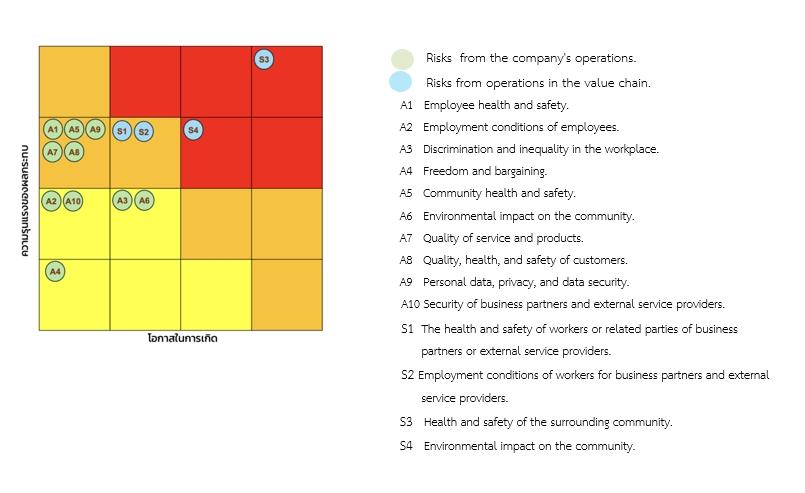
Monitoring and Reporting Performance
To ensure vigilance and monitoring of human rights violation prevention measures, the company has established a “Whistleblowing Policy” and various communication channels to allow employees and stakeholders to report or file complaints regarding any human rights violations. The company has a thorough, fair, and transparent process for investigating and handling complaints. Employees who commit human rights violations are considered to have violated the company's code of ethics and will be subject to disciplinary action according to established regulations. They may also face legal penalties if the act is illegal. Furthermore, regarding redress in the event of human rights violations, the company designates responsible departments to promptly mitigate the impact and provide fair compensation to those affected.
Complaint and Whistleblowing Process
1. Fact-finding and investigation will be conducted according to the guidelines in the Whistleblowing Policy by authorized personnel.
2. Each case found to have merit will be considered and handled by an investigation committee composed of assigned senior management.
3. Appropriate compensation will be provided to those harmed, and corrective measures will be established to prevent future occurrences.
4. A summary report will be submitted to the Corporate Governance Committee at every meeting. And report to the company's board of directors at least once a year. And disclose operational information in the annual sustainability report.
Results of operations according to human rights risk management measures:
In 2025, the company has not found or received any complaints related to non-compliance with labor standards, including child labor and forced labor, either within the company or in the supply chain. Regarding environmental complaints, the company has not found or received any complaints either. The company also has no complaints regarding violations of environmental laws. Furthermore, the company has not found or received any environmental complaints arising between the company and between the community and the company.
Policy Document Link
https://drive.google.com/file/d/1aGQbjCuWM3E9hHsjx25jQQq5IdssnV5s/view?usp=drive_link
Page Number in Report
1
Risks to the Company's Business Operations
Risk Register
| Risk Name | Risk Characteristics | Consequences | Management Measures | Related Risk Factors |
|---|---|---|---|---|
| Risk from operating a used truck hire purchase business | • Risk from approving hire purchase loan for used truck The Company has primary risk from hire purchase loan for used truck, such as risk of debtor quality and risk of collateral quality. (A) Due to the company's primary target group being individual customers who seek to lease second-hand trucks for income-generating occupations, the company faces risks from the sensitivity of this customer group to domestic economic conditions or adverse changes in related industries, such as the transportation, agriculture, or construction industries. These factors may affect the debt repayment ability of these customers, leading to an increase in the company's non-performing loans (NPL), which is a significant risk. If customers are unable to repay their installments as scheduled, the company faces the risk of loan losses or inability to repossess collateral from the customers, impacting the company's revenue generation capacity and overall performance. (B) The business risk in providing hire-purchase loans for second-hand trucks is not limited to debtor quality, as with new car loans. The company also faces collateral quality risk. This is because the collateral for the company's hire-purchase loans is used trucks, which naturally deteriorate with age. Additionally, some trucks may have undergone structural modifications or alterations. If the company cannot accurately inspect or assess the condition of the trucks serving as collateral, it could face significant risks. • Risk of Increased Business Competition in the Future Currently, there are not many operators in the market for hire-purchase loans for second-hand trucks. However, since this business is not directly regulated and supervised by any regulatory agency, those with sources of funding for such loans can easily enter the business. This may lead to increased business competition in the future, which could affect the growth potential of the loan portfolio and the company's performance in the face of heightened competition. • Risk of Relying on Experienced and Specialized Personnel in the Hire-Purchase Business for Second-Hand Trucks Providing hire-purchase loans for second-hand trucks requires the company to rely on personnel with experience, knowledge, and expertise in various areas. For example, marketing officers who are familiar with and have good relationships with second-hand truck dealers and quality customer brokers, credit analysts, and collateral evaluators who must have specific expertise in this business to assess debtor quality, debt repayment capability, and the appropriate collateral value, which mostly consists of trucks that have been in use for over six years and are subject to wear and tear. Additionally, personnel must understand the target customer group, which consists of transportation operators in various business sectors, to ensure accurate and thorough debtor quality assessments. • Risk of Tracking Collateral The assets used as collateral for the company's loans are trucks used for business purposes, which are mobile assets. Therefore, the company may face the risk of being unable to track and repossess the collateral in the event of debtor default. This would result in the immediate loss of the principal and all outstanding interest owed by the debtor, impacting the company's financial position and performance. • Risk of Selling Foreclosed Assets The company's collateral consists of second-hand trucks that have been used and have specific applications in related industries. Therefore, there is a risk of delayed sales of foreclosed assets or repossessed trucks, or the inability to sell such assets at the designated price or to recover the remaining debt value. This could negatively impact the company's financial position and performance. • Risk of Loss or Damage to Important Documents Due to Fire In the business of providing hire-purchase loans for second-hand trucks, legal contract documents and original vehicle registration books, which serve as proof of ownership of the collateral, are crucial for business operations and legal proceedings when customers fail to comply with the contract. If these documents are lost or damaged due to fire, it could negatively impact the company's business processes and performance. • Risk of Branch Employee Fraud in Credit Approval Branch officers play a crucial role in the credit approval process as they are responsible for meeting customers in person, collecting customer and guarantor documents, and assessing the condition of the collateral to determine the loan amount and interest rate for each customer. If branch officers have personal relationships with customers or second-hand truck dealers, or are involved with individuals who do not intend to genuinely apply for a hire-purchase loan, or engage in forgery, fraud, or theft of important personal documents of customers to falsely apply for loans on behalf of customers or guarantors, it could lead to incorrect assessment of customer quality or collateral condition. This could result in loan approvals that do not align with the customer's repayment capacity or render the hire-purchase agreement unenforceable, potentially causing the company to compensate for damages impacting customers or others affected by the branch officer's fraud. This would lead to non-performing loans and negatively affect the company's performance and financial position. | • In 2025, the company had non-delinquent hire-purchase debtors and debtors delinquent for less than 90 days, totaling 3,229.51 million baht, accounting for 95.06%. Meanwhile, non-performing loans (NPL) of debtors delinquent for more than 90 days amounted to 167.94 million baht, representing 4.94% of all hire-purchase debtors. The quality of some hire-purchase debtors continues to be affected by household debt burdens, economic conditions, and environmental issues, which reduce debtors' repayment capacity.The company has set aside allowances for expected credit losses, covering all non-performing loans. Currently, the company is focused on continuously developing credit scoring models to more effectively reflect debtors' repayment ability. The company also prioritizes closely monitoring and collecting debts, especially from NPL debtors, to increase debt repayment collection. Additionally, the company provides advice and assistance to some affected debtors by restructuring their debt to restore their status as quality debtors. • The company has mispriced vehicle appraisals, resulting in loan approvals that exceed the actual value of the collateral. This could lead to significant losses from loans if repossessed trucks are returned in a condition below the loan value, and the shortfall cannot be recovered or if debtors are unable to repay the debt. This would negatively impact the company's financial position and performance. • The company faces risks from relying on the knowledge, expertise, and experience of key executives and team members in management. The absence of such personnel could impact the company's operations in the short term, potentially leading to errors in credit approval or the valuation of collateral and debtor quality. This would negatively affect the company's financial position and performance. • The company has a policy of lending to customers with established domiciles and registered collateral within the branch's area. This allows branch officers to effectively verify customer information, income sources, and assess repayment capabilities. Additionally, the company has an effective debt repayment tracking policy compliant with legal requirements. For example, sending payment reminders before the due date, phone reminders, issuing letters for overdue payments starting from 5 days, and promptly tracking collateral for customers delinquent for one or more installments. This reduces the risk of customers moving collateral out of the area before the contract termination. The company also has a network of branches spread across various regions of the country, enhancing collateral tracking efficiency. Furthermore, the company employs professional external tracking teams (Outsource) to track collateral by visiting customer locations such as factories and residences. | • To mitigate such risks, the company has a policy to emphasize thorough and prudent credit evaluation to ensure efficiency. This includes continuous improvement and development of the credit evaluation process, such as establishing concrete credit policies, assessing customers' debt repayment ability, considering the purpose of hire-purchase agreements, and evaluating the qualifications of guarantors. The company regularly reviews its hire-purchase credit policies as well.The company utilizes credit information (Credit Bureau) in collaboration with the National Credit Bureau (NCB) to enhance the efficiency of customer screening. Additionally, credit quality assessment tools, such as the development of Credit Scoring Models, are employed. These tools cover income source verification, the residency and address of loan applicants and guarantors, and bankruptcy checks through the Legal Execution Department’s website and other official sources like the Royal Gazette announcements.Moreover, the company uses its customer database to analyze its loan portfolio strategically. This enables cross-selling opportunities, allowing customers with a good repayment history to receive tailored offers for additional credit products. • The company emphasizes prudent and thorough credit evaluation while maintaining effective debt monitoring and collection processes. Internal departments are instructed to send payment reminders to customers before the due date to prevent late payments. In cases where customers are overdue by one installment or 30 days or more, the company will follow up on the debt through phone calls and issue reminder letters to encourage payment. • The management has assigned guidelines for closely monitoring the payment status of debtors on a monthly basis. Additionally, the company has established a compensation policy for branch employees that takes into account an appropriate non-performing loan (NPL) ratio.Moreover, the company continues to focus on expanding its customer base in the transportation sector for consumer goods. Since consumer goods are daily essentials, their supply and demand do not fluctuate seasonally. This ensures that transport operators, who are the company's hire-purchase clients, have stable incomes and can consistently repay their installments as outlined in the aforementioned business policies. • With over 30 years of experience in the used truck hire-purchase loan business, the company boasts a management team and personnel with extensive expertise in inspecting and appraising the condition and value of used trucks. This enables the company to provide accurate valuations and determine appropriate credit limits based on the condition and value of collateral effectively.Furthermore, the company has a policy to offer hire-purchase loans for specific models and brands of used trucks that are popular and have a well-supported market, such as ISUZU, HINO, and FUSO. The company also focuses on selecting key partners from standardized used truck dealerships that sell quality used trucks, further ensuring high-quality collectoral. Long term considerations are aligned with the debtor's repayment ability and the age of the trucks used as collateral. • The used truck hire-purchase loan business requires specialized knowledge, experience, and expertise in assessing the quality of pre-owned trucks. The company, therefore, assesses that the likelihood of new entrants entering the market and creating intense competition is relatively low. With a team experienced in the used truck hire-purchase loan business for over 30 years, along with maintaining strong relationships with partners, brokers, and a network of branches spread across all regions of the country, the company is confident in its ability to compete in the used truck hire-purchase loan market with both existing players and potential new entrants. • The company has clear goals and strategic plans for human resources to retain high-quality personnel and specialists, motivating both management and employees to work with the company continuously in the long term. The company’s management team and key personnel from various departments have been working with the company since its inception. Additionally, the company has a policy of transferring knowledge and experience through employee training at all levels to build a capable workforce, ensuring the company operates efficiently and effectively. • The company has adjusted its policy for managing non-performing assets by prioritizing quick and efficient sales to reduce the impact of declining sale prices. The company will communicate details about seized vehicles—such as models, photographs, and offered prices—to target customers, such as second-hand truck dealers who are business partners and have previously referred hire-purchase loan customers to the company. Additionally, information about the seized vehicles will be promoted on the company’s website as another sales channel.All repossessed trucks will be gathered at the company’s storage yard, located on Phol Damri Road, Kamphaeng Saen District, Nakhon Pathom. This is a main route used by transportation operators, increasing the opportunity to reach target customers interested in second-hand truck hire-purchase options.Furthermore, the company has implemented a policy of offering hire-purchase loans specifically for second-hand trucks that are popular in the market, have liquidity for buying and selling, and generally approve credit limits at approximately 70–85% of the assessed collateral value. Additionally, under the hire-purchase agreement, if the selling price of the truck is lower than the outstanding debt, the company can claim the remaining difference from the debtors. This minimizes the likelihood of the company incurring significant losses from the disposal of non-performing assets. • The company has assigned branch managers the responsibility of preparing, storing, and managing all customer documents and related files in the form of electronic copies stored in a centralized system, with data backups conducted daily at an offsite location to prevent data loss. Additionally, vehicle registration documents are to be sent for storage at the company’s headquarters.Furthermore, the company has required its internal audit department to verify the completeness of contracts and vehicle registration documents at each branch annually. Branch managers are also responsible for summarizing the results of the verification of vehicle registration documents and hire-purchase contracts for new loans issued each month, and reporting this to the Credit Operations Manager on a monthly basis.Moreover, the document storage room (secure room) is strictly access-controlled and covered by fire insurance. To date, the company has never encountered problems or received complaints about missing registration documents or other records. • The company has acknowledged these risks and established guidelines requiring branch officers to send all documents related to credit approval—including debtor quality evaluation documents and collateral assessments—to the authorized approvers for each credit limit or condition. This authorization process operates as a committee structure, including the Credit Approval Committee at the headquarters, the Chief Credit Operations Officer, the Executive Committee, or the Board of Directors, respectively.Additionally, before drafting hire-purchase agreements, the Credit Operations Department at the headquarters will re-examine all credit approval information and supporting documents. This review includes verifying the documents used to create credit scoring models and collateral value assessments, among other things.Moreover, the company has implemented a policy to compensate branch employees only after debtors have made at least three on-time installment payments. This ensures that branch officers perform debtor quality and collateral assessments accurately and in compliance with the defined policies. | 728 · Description: Volatility in the industry in which the company operates · Info category: STRATEGIC_RISK · 729 · Description: Behavior or needs of customers / consumers · Info category: STRATEGIC_RISK · 730 · Description: Government policy · Info category: STRATEGIC_RISK · 731 · Description: Policies or international agreements related to business operations · Info category: STRATEGIC_RISK · 732 · Description: Changes in technologies · Info category: STRATEGIC_RISK |
| Legal and regulatory risks | In the business of providing hire-purchase loans for second-hand trucks, it is necessary to comply with laws related to business operations. The company is obligated to adhere to the laws and regulations set by regulatory agencies, such as the Consumer Protection Board, the Anti-Money Laundering Office, the Office of Insurance Commission, the Credit Information Protection Board, the Securities and Exchange Commission, the Department of Business Development, the Ministry of Commerce, the Personal Data Protection Committee (PDPC), the Department of Provincial Administration, among others, as well as other laws related to business operations.Furthermore, the company adopts appropriate practices according to the Bank of Thailand's guidelines to ensure smooth and proper business operations in line with financial institution standards. Non-compliance with legal or regulatory requirements could significantly impact the company's reputation or business operations. Key examples of such risk factors include: • Risk from being sued by customer from debt collection The company faces risks of being sued by debtors, which may arise from debt collection efforts leading to disputes with debtors being pursued. This includes non-compliance with the Debt Collection Act, the Debt Collection Regulation Committee's announcements on the frequency of contact for debt collection, or other relevant regulations. • Risk from government agencies’ taking control of used truck hire purchase business Currently, the company's business of providing hire-purchase loans for second-hand trucks is not regulated by any government agency, including the Office of the Consumer Protection Board (OCPB), which sets standard forms for hire-purchase agreements and imposes fines and fees.According to the 2022 announcement, which defines automobile hire-purchase and motorcycle hire-purchase businesses as controlled businesses, an automobile is defined as a personal vehicle or personal-use truck, not used for commercial transportation or the owner's business for hire. The company's business of providing hire-purchase loans for second-hand trucks is intended for commercial purposes, such as for customers' commercial transportation or business. Additionally, the company's operations are not regulated by the Bank of Thailand and are not subject to Section 654 of the Civil and Commercial Code, which sets a maximum interest rate of 15% per year for loan contracts. This is because the company provides hire-purchase loans, not loan services. Therefore, the company's current hire-purchase loan business for second-hand trucks is not subject to regulations regarding contract content or interest rate caps. | • The company recognizes the risks that may arise from customers filing complaints or lawsuits against the company for non-compliance with debt collection regulations, which could negatively impact the company's reputation, as well as its ability to maintain and expand its customer base. • If, in the future, government agencies regulate the provision of hire-purchase loans for second-hand trucks to ensure standardized operations among operators, the company may be affected in terms of business operations and performance. | The Risk Management and Corporate Governance Department serves as a central unit to provide guidance, monitor compliance, and offer recommendations on regulatory and legal compliance to internal departments and affiliated companies to ensure that business operations comply with relevant laws and regulations. Additionally, the department reports on governance results, risk analysis, and significant risk mitigation measures to the Risk Management Committee, the Board of Directors, sub-committees, and related management teams regularly to ensure effective regulatory risk management. The company has established a Corporate Good Governance Policy to be strictly adhered to, fostering a culture of integrity as a foundational principle while considering risks, responsibilities, and fair treatment of stakeholders and all related parties under correct, transparent, and accountable operations in accordance with good governance principles. Key examples of such risk factors include: • The company has instructed branch officers and debt collection officers to strictly comply with relevant laws regarding debt collection. Emphasis is placed on consistent communication to ensure correct understanding with customers and on assessing debt repayment capacity to reduce the risk of default, which is a primary cause of litigation. In cases of overdue payments, the company has established fair debt collection practices in line with relevant regulations to reduce the risk of future litigation. To date, the company has had no disputes related to debt collection complaints. • Last year, the company demonstrated readiness to comply with the Anti-Money Laundering Act B.E. 2542 (1999) and subsequent amendments. The company has developed policies, procedures, risk assessment and mitigation measures, and provided personnel and training as required by the regulations. This includes processes for collecting customer information such as personal data, transaction details, risk assessments, and ongoing review periods from the account closure date or termination of the customer relationship. The company has also established procedures for reporting to the Anti-Money Laundering Office. • The company recognizes such risks and has assigned the Risk Management and Corporate Governance Department, along with the Business Law Department, to closely monitor changes in legal requirements, regulations, and rules related to the company's business operations. Additionally, the company has joined the Thai Hire-Purchase Business Association, enabling it to quickly track regulatory changes, exchange knowledge and information with other industry operators, understand trends, and prepare to mitigate the impact of such changes. | 756 · Description: Change in laws and regulations · Info category: COMPLIANCE_RISK · 757 · Description: Laws and regulations is not favorable for doing business · Info category: COMPLIANCE_RISK |
| Cybersecurity and Technology Risks | Changes in digital solutions play a significant role in providing hire-purchase loans and insurance brokerage services, as well as influencing customer behavior towards the use of technology services. Financial and economic transactions or services are particularly vulnerable to cyber-attacks and other technology-related risks. | It can significantly impact business operations and cause substantial financial damage. | In tandem with driving innovation, the company has invested heavily in technology resources and efforts to prevent malicious actors from accessing computer systems and causing data breaches, obtaining confidential information, or disrupting services. The company also ensures that its networks and infrastructure remain robust, reliable, and resilient to guarantee business continuity. The company is committed to safeguarding the confidentiality, integrity, and availability of its information, resources, and infrastructure. | 744 · Description: Information security and cyber-attack · Info category: OPERATIONAL_RISK |
| ESG Risk Management | The company is concerned about environmental changes, including social and environmental responsibility, as well as risk assessment and impact from these issues. Therefore, there are guidelines for managing these risks from the communication stage, providing knowledge, and undergoing training from relevant government agencies to ensure business operations are confident and can promptly create awareness of the changes from external factors. These guidelines are also in line with industry changes. The considerations can be divided into the following topics: Environmental Issues (Environment) The company operates in the business of providing hire-purchase loans for second-hand trucks, which may not be directly impacted by climate and environmental changes. However, it cannot avoid indirect impacts from stakeholders. Social Issues (Social) The company places great importance on the care and welfare of its employees and personnel, believing that employees are the company's most valuable asset. If there is a shortage of employees or issues that prevent them from performing their duties, it could have significant consequences. Governance Issues (Governance) Currently, the company emphasizes understanding the principles of governance and good corporate governance. This involves continually monitoring and considering various laws and regulations to ensure continuity and genuine understanding, enabling compliance with the intended principles. The company also strives to improve accuracy and stay updated with changing circumstances. | Environmental Issues (Environment) The impact of customers who are unable to make timely payments due to natural disasters such as droughts, floods, heavy storms, forest fires, or crop field fires, and other issues, including the impact on agricultural yields, leading to reduced customer income or transport volumes, all of which affect customer income. Social Issues (Social) These issues can directly and indirectly impact business operations, such as affecting the company's image, reputation, and the quality of second-hand truck hire-purchase services. Providing adequate and appropriate welfare for employees to ensure their physical and mental health, safety, and happiness at work leads to greater job satisfaction and loyalty to the company. Governance Issues (Governance) Non-compliance with legal or regulatory requirements can significantly impact the company's reputation or operations. For example, sustainable operations in governance and economic dimensions based on good corporate governance principles. The company recognizes the roles, duties, and responsibilities in governance, believing that governance principles are key determinants. | Environmental Issues (Environment) The company may avoid direct environmental risks that are expected to increase in the near future. For example, the behavior of using more environmentally friendly trucks, changes in governmental regulations, or higher production and usage standards for trucks related to environmental issues. These could have a greater direct impact and create more significant indirect effects, which may be difficult to avoid. Social Issues (Social) The company has established a business ethics policy to create practices that promote mutual respect, acceptance of opinions, and equality among employees and between employees and management. Regular employee training is conducted to maintain service quality. The company also recognizes the importance of managing business partner risks by issuing a code of business ethics to support and promote good governance and ethical standards among all business partners in alignment with the company. Governance Issues (Governance) Adhering to the principles of sustainable development (SD), the company focuses on good corporate governance, social responsibility, and environmental care (ESG). The goal is to enhance competitive capability and increase sustainable business value for shareholders while considering the benefits of stakeholders. This ensures continuous and stable business growth. | 1717 · Description: ESG risk · Info category: STRATEGIC_RISK |
| Financial risk | • Risk from reliance on funding sources from financial institutions or debentures As of December 31, 2025 the company and its subsidiaries had interest-bearing debts totaling 2,238.7 million baht, a decrease of 853 million baht from the same period in 2023, which stood at 3,091.7 million baht. This decrease resulted from the company's liquidity preservation policy and the gradual repayment of debentures. The outstanding financial institution borrowings as of December 31, 2025 amounted to 364.6 million baht, an increase of 55.9 million baht compared to 308.7 million baht in the same period in 2023. This increase was due to the company receiving additional credit facilities and gradually repaying bank loans according to repayment schedules. Meanwhile, the outstanding debentures as of December 31, 2025 amounted to 1,464.8 million baht, a decrease of 908.3 million baht from the same period in 2023, which stood at 2,373.1 million baht. This reduction was primarily from the redemption of three debenture series totaling 1,083.2 million baht, partially offset by the issuance of a new debenture series worth 169.6 million baht. • Liquidity risk and the adequacy of working capital The company predominantly has lease agreements with terms ranging from 4 to 5 years, while most loans have repayment schedules within 1 to 4 years. This results in a maturity mismatch, where the timing and amounts of debt repayments may not align with the anticipated schedule and amounts of installment payments received by the company. Such a mismatch poses a risk if the company cannot secure funding in time to meet its maturing debt obligations, potentially leading to a default. This could adversely impact the company's liquidity, financial standing, and operational performance. The company's liquidity ratios from 2023 to 2025 were 1.67, 1.46, and 1.34, respectively. The ratios of interest-bearing liabilities due within one year to total interest-bearing liabilities for the same period were 0.31, 0.40, and 0.58, respectively. Lastly, the ratios of interest-bearing liabilities to total equity for 2023 to 2025 were 1.48, 1.45, and 1.12, respectively. • Risk from interest rate fluctuations The company’s main revenue is derived from interest income generated by its hire-purchase financing business for second-hand trucks. The company applies fixed interest rates throughout the hire-purchase period. On the other hand, its borrowing costs, which serve as a primary funding source for the loans it provides, consist of both fixed and floating interest. As of December 31, 2025, the company had a total interest-bearing debt of 2,238.7 million baht. This consisted of 364.6 million baht in floating-rate loans, accounting for 16.3% of total interest-bearing debt, and 1,874.1 million baht in fixed-rate loans, accounting for 83.7% of total interest-bearing debt. | • If the company is unable to generate sufficient revenue, it may face liquidity issues in repaying the principal and interest. Additionally, as debt burden increases, it may become more challenging to secure further loans for business expansion. • Loans with a floating interest rate are loans obtained from financial institutions to serve as working capital within the company. Therefore, if interest rates rise in the future due to economic conditions, the interest margin will decrease, directly affecting the company's performance and profitability. For example, if the company's loan interest rate increases by 1%, it will result in an increase in the company's cost by approximately 3.6 million baht. Conversely, if interest rates decrease, the company’s interest expenses will be reduced, which will benefit its operational performance. | • Maintain debt levels at an appropriate level. • Diversify funding sources to avoid over-reliance on any single source. • Manage cash flow to ensure sufficient liquidity. • Closely monitor economic conditions and interest rates. • Plan debt repayment in advance to mitigate the risk of default. | 762 · Description: Change in financial and investment policies of financial institutions that affect business operations · Info category: FINANCIAL_RISK · 1724 · Description: Liquidity risk · Info category: FINANCIAL_RISK |